


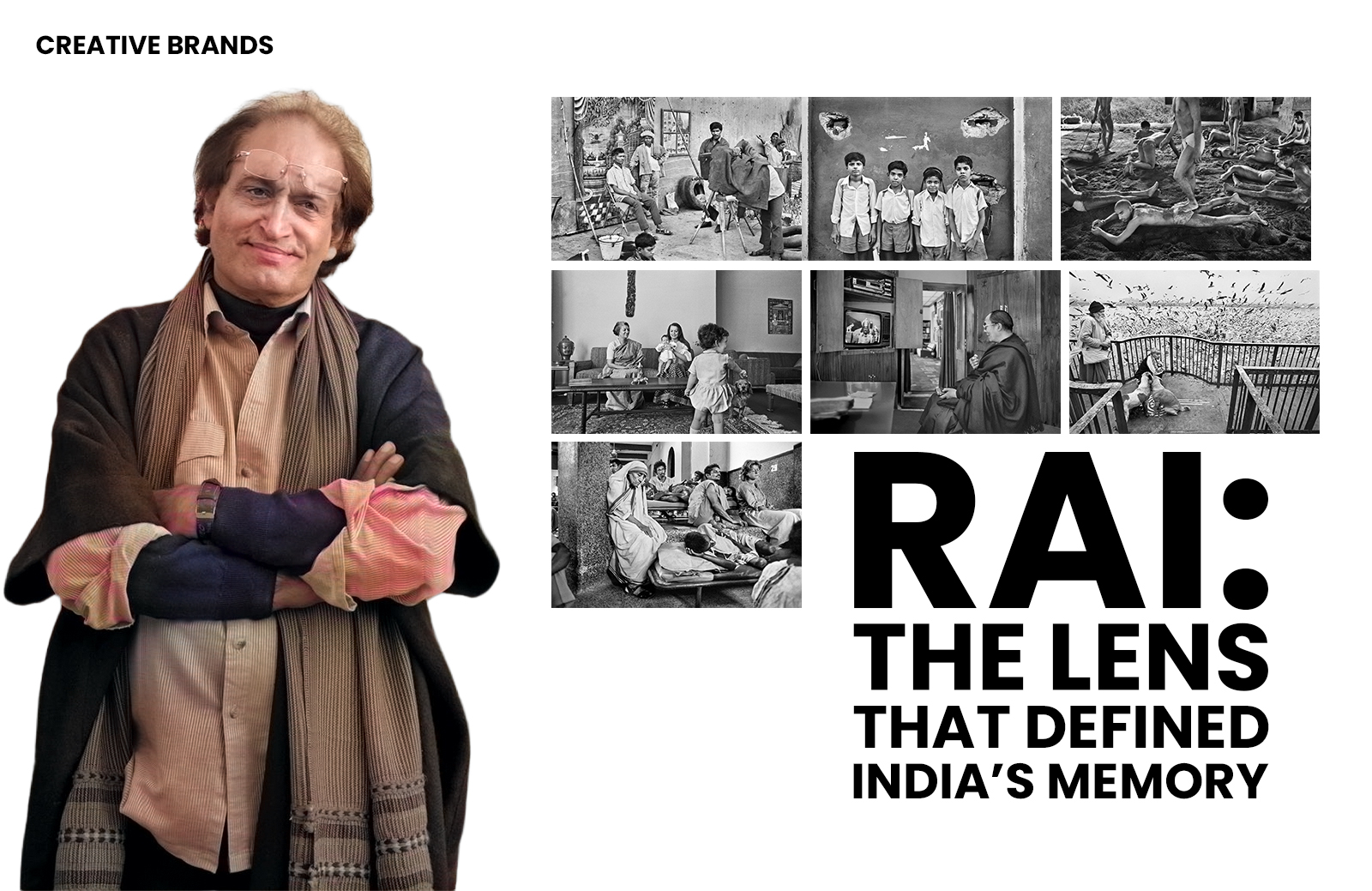
Raghu Rai, India’s most celebrated photographer and photojournalist, passed away on 26 April 2026 at the age of 83. A Magnum Photos member and Padma Shri awardee, Rai chronicled India’s soul for six decades, capturing its politics, tragedies, and everyday humanity with unmatched depth and moral clarity.
Raghu Rai’s passing marks the end of an era in Indian photojournalism. For more than sixty years, his lens shaped how India saw itself and how the world understood India. Born in 1942 in Jhang, now in Pakistan, Rai began his career at The Statesman in 1965. His sharp eye and instinct for human stories quickly distinguished him, and in 1977 Henri Cartier-Bresson nominated him to Magnum Photos, placing him among the world’s finest photographers.
Rai’s work was never just about aesthetics; it was about conscience. His coverage of the Bangladesh War in 1971 earned him the Padma Shri, one of India’s highest civilian honours. But it was his haunting documentation of the 1984 Bhopal gas tragedy that cemented his reputation as a moral witness. His images of survivors, devastation, and corporate neglect were later compiled into Exposure: Portrait of a Corporate Crime, a book that remains a landmark in visual activism.


As Director of Photography at India Today between 1982 and 1992, Rai produced essays that blended artistry with journalism, covering politics, culture, and social upheaval. His photographs appeared in Time, Life, The New York Times, Sunday Times, Newsweek, and The New Yorker, ensuring that India’s stories reached global audiences.
Rai authored more than 18 books, each a testament to his commitment to chronicling India’s diversity and resilience. From Raghu Rai’s India to Delhi: A Portrait, The Sikhs, Taj Mahal, and Mother Teresa: A Life of Dedication, his works were not mere collections of images but meditations on identity, spirituality, and endurance. His retrospective exhibitions travelled across continents, positioning Indian photojournalism alongside global masters.
His daughter, filmmaker Avani Rai, offered an intimate glimpse into his life through Raghu Rai: An Unframed Portrait (2017), a documentary that revealed the man behind the camera—restless, uncompromising, and deeply human.
Recognition followed him throughout his career. In 2017, India’s Ministry of Information and Broadcasting honoured him with a Lifetime Achievement Award. In 2019, he received the prestigious Académie des Beaux-Arts Photography Award – William Klein, affirming his place in the pantheon of international photography. Yet, Rai himself often insisted that awards were secondary; the true reward was in bearing witness and leaving behind images that mattered.
What made Rai singular was his ability to balance intimacy with scale. He could capture the quiet dignity of Mother Teresa as effortlessly as the chaos of a political rally. His photographs were not detached observations but empathetic encounters, infused with a sense of responsibility. He believed that photography was not about freezing moments but about revealing truths.
On 26 April 2026, his family announced his death via Instagram, a modern medium for a man who had spent his life working with analogue film before embracing digital. The announcement underscored the generational bridge he embodied: a pioneer of traditional photojournalism who remained relevant in the digital age.
Raghu Rai’s legacy is not confined to galleries or books. It lives in the collective memory of a nation. His lens gave India its visual archive—its triumphs, tragedies, contradictions, and beauty. In his absence, Indian photojournalism loses its most eloquent voice, but his images will continue to speak, reminding us that the most powerful impressions are those that linger, unseen yet unforgettable.
Discover more from Creative Brands Mag
Subscribe to get the latest posts sent to your email.












Leave a comment