


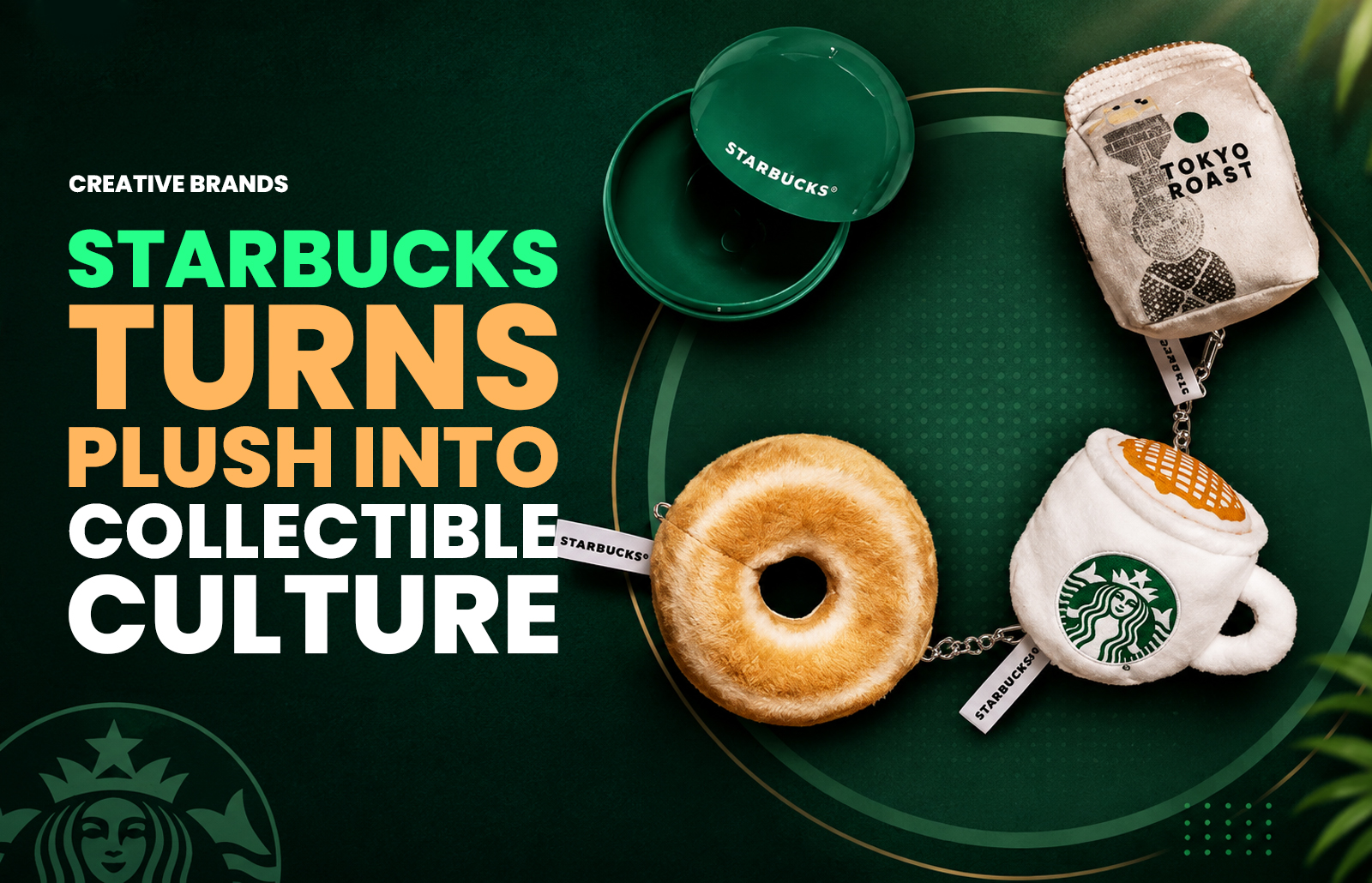
Starbucks is expanding its merchandise strategy with a plush collection that transforms brand loyalty into lifestyle symbolism. Beyond utility, the plush toys act as mobile advertising, collectible culture and emotional touchpoints. The initiative reflects how consumer brands increasingly blur the line between product and memory, utility and identity.
Starbucks has long understood that its brand extends beyond coffee. The company’s latest plush collection demonstrates how merchandise can function as both advertising and collectible culture, offering consumers a new way to carry the brand into everyday life. Unlike drinkware or seasonal packaging, plush toys work differently: they can be displayed, carried, photographed and collected, creating an additional physical touchpoint that exists independently of the original purchase.
This distinction is crucial in modern marketing. A plush clipped to a backpack or handbag becomes a travelling billboard, displaying the visual language of Starbucks in environments far removed from the coffee shop. The product itself becomes advertising, not through traditional campaigns but through the consumer’s own participation in carrying and showing it. In this way, Starbucks leverages lifestyle integration to extend its reach into spaces where coffee cups cannot go.
The model also connects with the growing popularity of collectible merchandise. Consumers increasingly purchase items not only for practical utility but for their emotional, aesthetic or symbolic value. Collectibles serve as reminders of a brand, markers of personal taste or objects tied to particular memories. Starbucks has previously tapped into this trend with seasonal releases and collaborations. In 2026, for instance, the company launched a major Toy Story collection in South Korea, combining drinkware and merchandise to turn its stores into destinations for fans and collectors.
The plush collection builds on this strategy by expanding the meaning of loyalty. Consumers do not necessarily buy the merchandise because they need a plush toy; they buy it because it represents a connection to the Starbucks experience. That connection is layered: it can be nostalgic, aesthetic or social, and it transforms the brand into something that lives beyond the café.
In the wider consumer industry, this approach reflects a shift towards products that embody identity as much as utility. A collectible can function as a symbol of belonging, a piece of culture or a memory made tangible. For Starbucks, the plush collection is not simply about selling toys; it is about embedding the brand into the rhythms of everyday life, where loyalty is expressed through ownership and display rather than just repeat purchase.
By positioning merchandise as both advertising and collectible, Starbucks underscores its ability to adapt to evolving consumer behaviour. The plush toys are not just accessories; they are cultural artefacts that extend the Starbucks narrative into homes, schools, offices and streets. In doing so, the company reinforces its role as a brand that thrives on connection, creativity and the blending of product with experience.
Discover more from Creative Brands Mag
Subscribe to get the latest posts sent to your email.















Leave a comment