


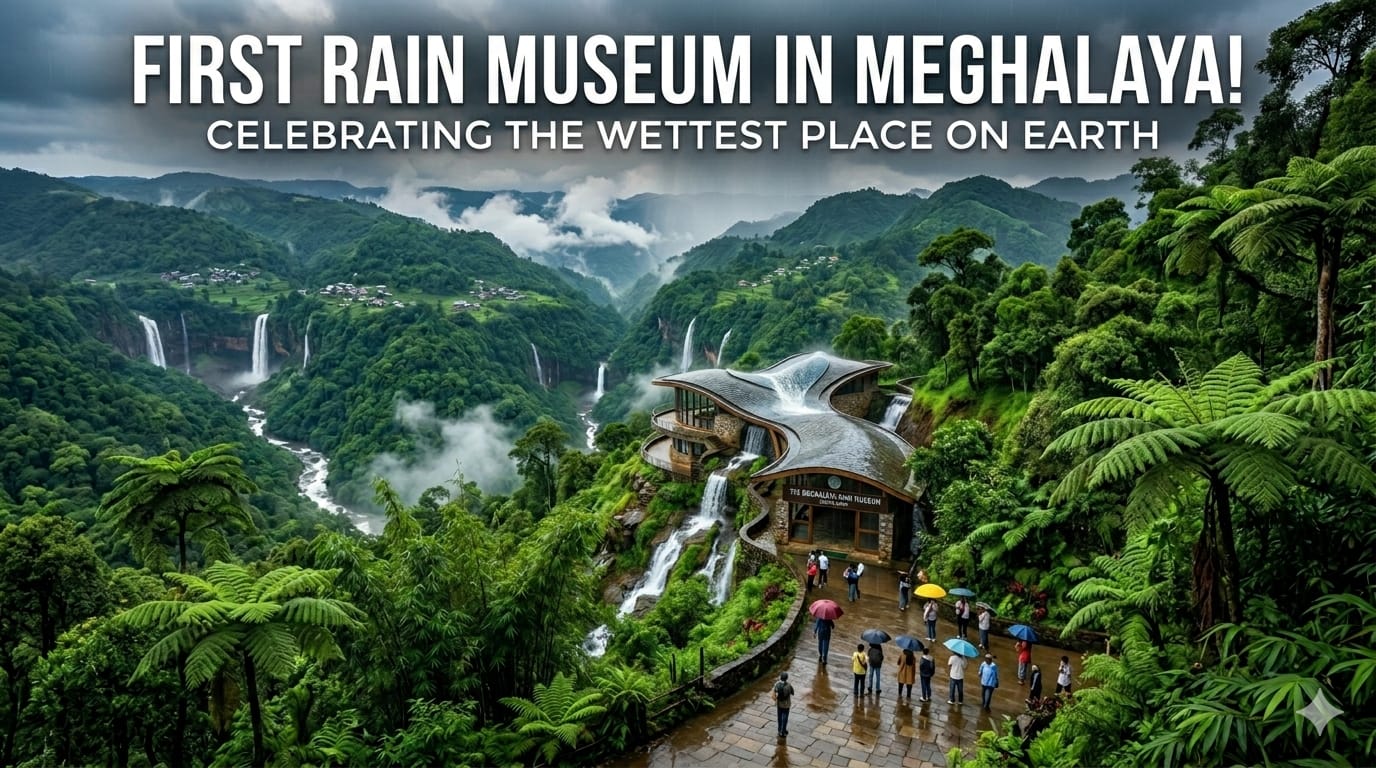
In a first for the world, the wettest place on Earth will soon celebrate rain through culture, science and immersive experiences, boosting eco-tourism and climate awareness while honouring local heritage and community life.
Meghalaya is poised to make global headlines with the announcement of the world’s first Rain Museum in the village of Mawsynram, renowned for receiving some of the highest annual rainfall on the planet. The ground-breaking project, backed by an investment of around ₹35 crore, aims not merely to document rain as a meteorological phenomenon but to transform it into a rich cultural, scientific and sensory narrative that celebrates the region’s unique identity.
Plans for the museum include immersive rain simulation zones that recreate the sound, drama and feel of Mawsynram’s monsoon indoors, alongside interactive exhibits explaining cloud formation, atmospheric physics and the role of the Indian monsoon in shaping ecology and culture. These high-tech and hands-on displays are designed to appeal to students, scientists, travellers and climate enthusiasts alike, encouraging a deeper understanding of rainfall and its broader environmental implications.
More than a scientific hub, the Rain Museum will pay homage to the Khasi people and their age-old relationship with rain. Exhibitions will showcase traditional rain-ready architecture, bamboo knup umbrellas and the craftsmanship and folklore that have grown from living with nearly perpetual rain. Augmented-reality storytelling spaces may allow visitors to stroll virtually through a monsoon-soaked Khasi village or witness the formation of the iconic living root bridges that characterise this corner of Northeast India.
Government officials have described the initiative as part of a broader strategy to elevate Mawsynram as a niche global destination for experiential and eco-tourism. By blending sustainability, education and heritage, the museum is expected to attract domestic and international visitors seeking meaningful travel experiences beyond typical sightseeing. The project also includes improvements to local infrastructure, such as new roads, more homestays and an eco-resort, and is intended to create jobs and economic opportunities that benefit the community.
Local authorities hope that by placing science, culture and storytelling under one roof, the Rain Museum will become a beacon for climate awareness in an era of environmental change, while also reinforcing Meghalaya’s rich cultural fabric on a global stage.
Discover more from Creative Brands Mag
Subscribe to get the latest posts sent to your email.
















Leave a comment