


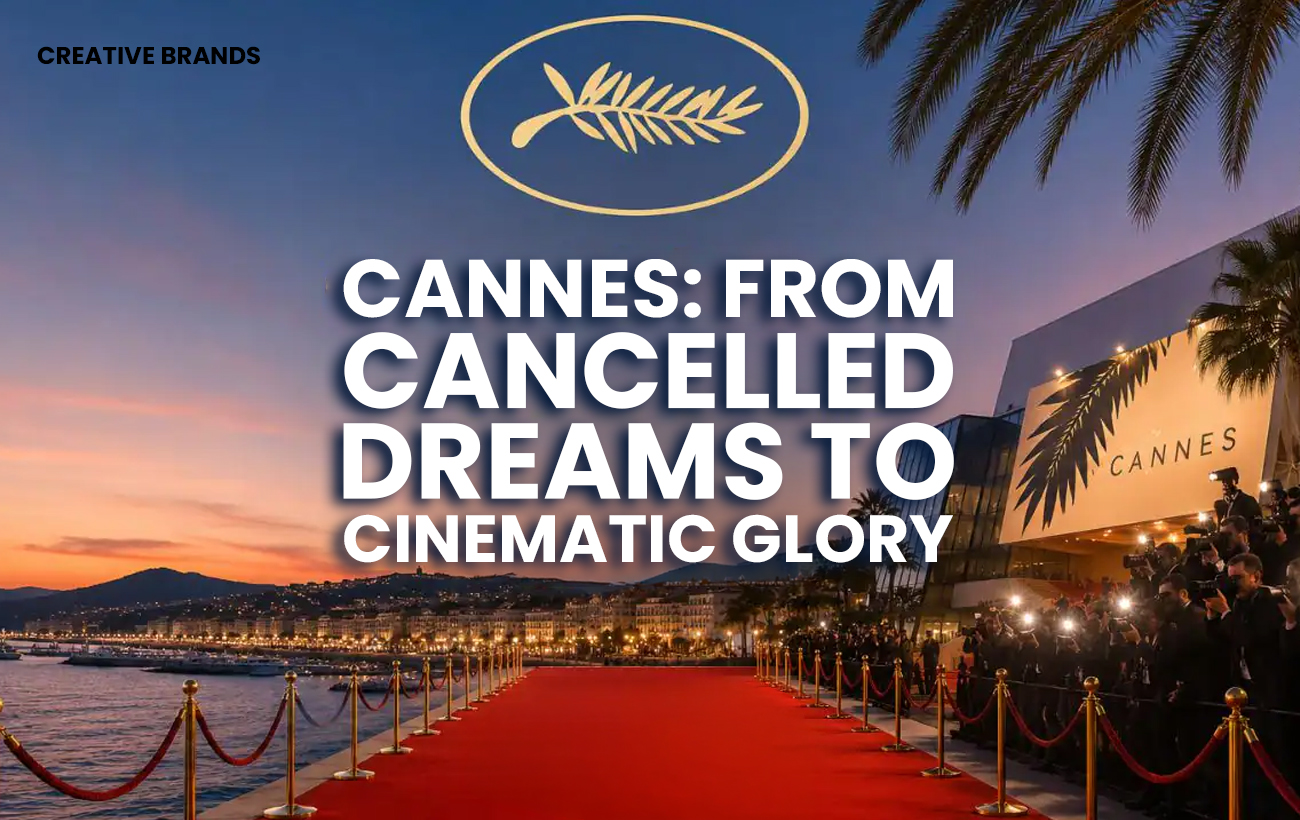
The Festival de Cannes, conceived in 1939 but cancelled by war, emerged in 1946 as cinema’s most prestigious stage. From Cold War censorship to May ’68 protests, and from Coppola’s Apocalypse Now to Tarantino’s Pulp Fiction, Cannes has blended glamour, politics and artistry, shaping global film history for eight decades.
The Festival de Cannes, today the world’s most prestigious film gathering, was born from defiance and resilience. Its origins lie in 1939, when France sought to counter the fascist manipulation of cinema at the Venice Mostra. Diplomat Philippe Erlanger envisioned a festival free from political coercion, and Cannes was chosen as its glamorous stage. Yet war intervened. The inaugural edition, scheduled for September 1939, was cancelled as Germany invaded Poland. The dream lingered, only realised in 1946 when post-war France finally hosted the first true Festival de Cannes.
The early years were marked by optimism and spectacle. Fireworks, parades, and cosmopolitan gatherings created a celebratory atmosphere, even as technical hitches disrupted screenings. Each nation left with a Grand Prix, affirming Cannes as a forum for artistic collaboration. Soon, the Croisette became synonymous with glamour, with stars such as Kirk Douglas, Sophia Loren, Grace Kelly and Brigitte Bardot ascending its red steps. Yet beneath the sequins, the Cold War cast its shadow. Films were censored to avoid diplomatic incidents, and the Festival itself was cancelled in 1948 and 1950 due to financial strain. By 1955, however, Cannes had stabilised, awarding its first Palme d’Or to Delbert Mann’s Marty.
The 1960s brought bold selections and political turbulence. Under Culture Minister André Malraux, Cannes embraced daring works such as François Truffaut’s The 400 Blows and Alain Resnais’ Hiroshima mon amour. Scandals erupted with Fellini’s La Dolce Vita and Buñuel’s Viridiana. In 1968, amid France’s social unrest, directors including Truffaut and Godard halted screenings in solidarity with student protests. The Festival was abandoned mid-way, a powerful reminder that Cannes was not merely a showcase of glamour but a stage for political expression.
The 1970s and 1980s saw Cannes carve out a new identity. Gilles Jacob’s leadership introduced innovations such as the Caméra d’Or for debut films and midnight screenings. The Festival diversified its selection, welcoming films from across the globe. Coppola’s Apocalypse Now and Wenders’ Paris, Texas exemplified Cannes’ embrace of cinematic daring. The new Palais des Festivals, inaugurated in 1983, symbolised its modern era, while the Marché du Film grew into the world’s largest film market. Cannes became both a celebration of artistry and a hub of industry.
By the 1990s, Cannes had become a truly global platform. Asian cinema flourished, with Chen Kaige’s Farewell My Concubine and Wong Kar-wai’s Happy Together earning acclaim. American independent cinema also found space, with Tarantino’s Pulp Fiction winning the Palme d’Or in 1994. Cannes reflected the world onscreen, from Ken Loach’s Land and Freedom to Kassovitz’s La Haine. Its 50th anniversary in 1997 crowned Ingmar Bergman with the Palme des Palmes, affirming Cannes’ legacy as cinema’s highest stage.
The new millennium brought further expansion. Gilles Jacob and Thierry Frémaux steered Cannes into the digital age, launching initiatives such as Cinéfondation to nurture young filmmakers. The Festival celebrated its 60th anniversary in 2007 with 33 directors contributing short films, while Frémaux ensured Cannes travelled globally through events in Buenos Aires, Bucharest, and Hong Kong. Even the Covid-19 pandemic in 2020 could not silence Cannes, which adapted with a virtual Marché du Film and a curated Cannes 2020 label.
Today, Cannes stands as both a glamorous ritual and a resilient institution. Its red carpet remains a symbol of cinematic prestige, but its history reveals a deeper truth: Cannes was forged in resistance, shaped by politics, and sustained by artistry. From its cancelled beginnings in 1939 to its global stature in 2026, the Festival de Cannes embodies cinema’s power to reflect, challenge, and inspire.
Discover more from Creative Brands Mag
Subscribe to get the latest posts sent to your email.














Leave a comment