


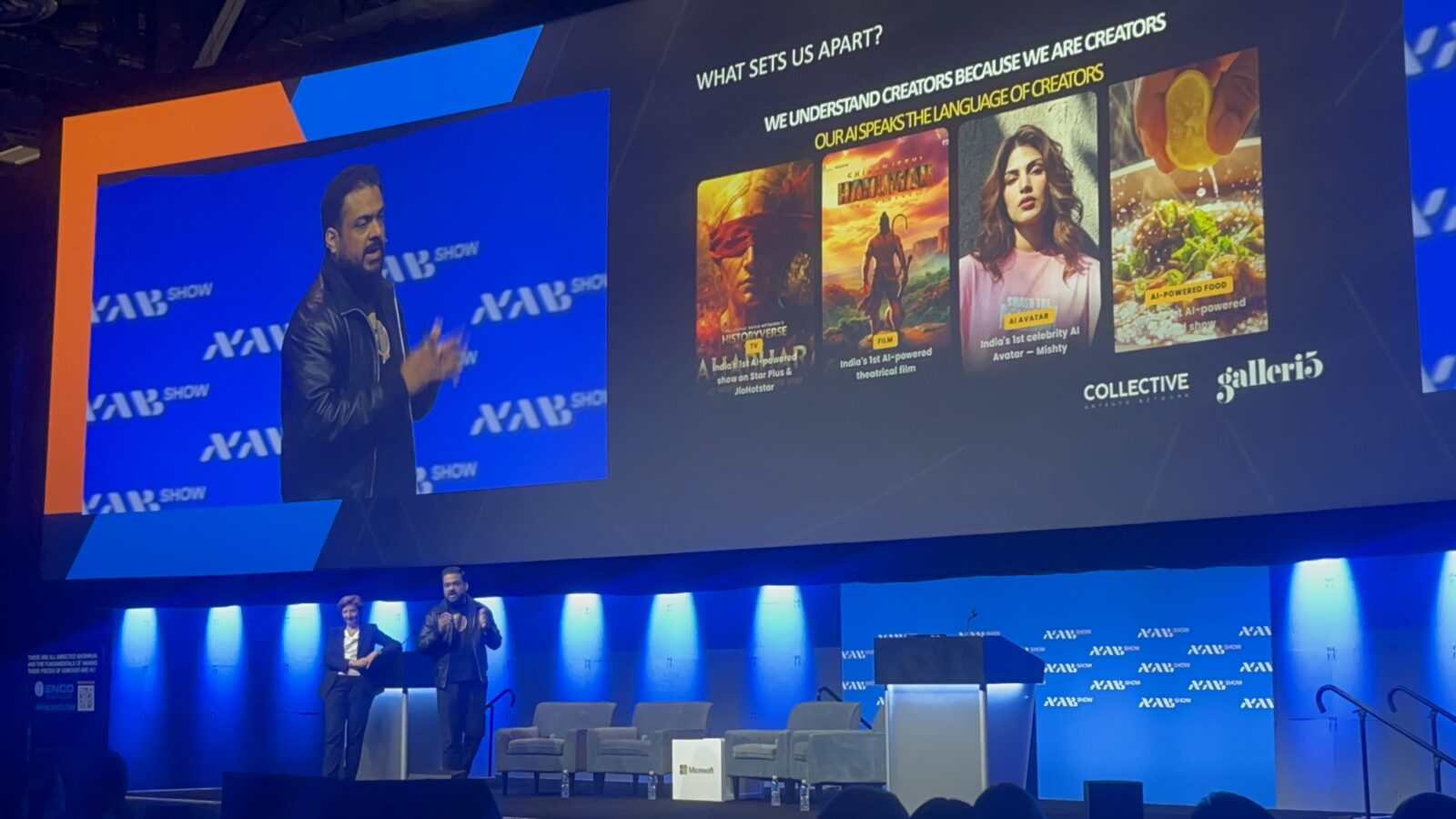
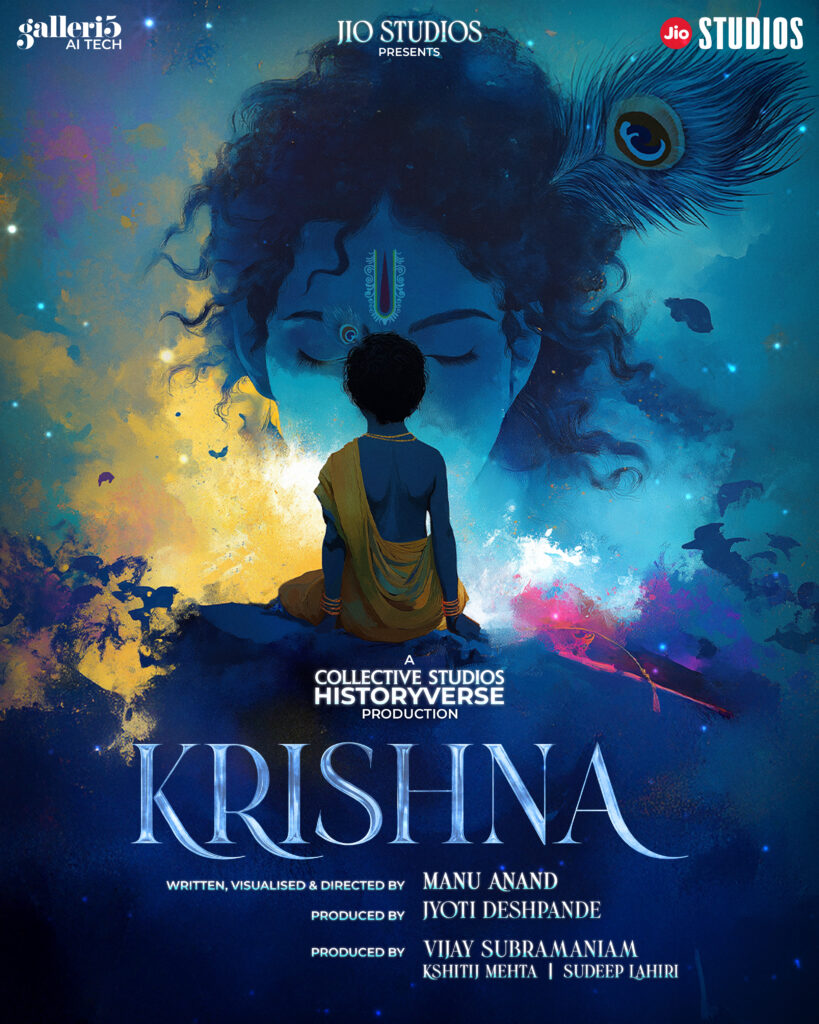
Jio Studios and Collective Studios have unveiled the first teaser of Krishna at NAB Show 2026, showcasing an AI-native filmmaking pipeline powered by Microsoft Azure. The project marks a major leap in integrating artificial intelligence into cinema while retaining emotional storytelling, positioning Indian content for global audiences at unprecedented scale.
The global stage of NAB Show 2026 in Las Vegas became the launchpad for what may prove to be a defining moment in the evolution of filmmaking, as Jio Studios and Collective Studios unveiled the first teaser of Krishna, an ambitious theatrical feature directed by Manu Anand. More than a conventional film announcement, the unveiling signalled the arrival of a fundamentally new approach to cinema—one in which artificial intelligence is not merely a tool, but the very backbone of the creative process.
At the heart of Krishna lies an AI-native production pipeline developed by Galleri5, the in-house platform of Collective Artists Network. Built on Microsoft Azure’s advanced cloud and artificial intelligence infrastructure, the system integrates technology across every stage of filmmaking—from conceptual world-building and character design to shot composition and final rendering. The result is a production model that departs sharply from traditional VFX-heavy or animation-led workflows, instead embedding AI into the creative DNA of the project.
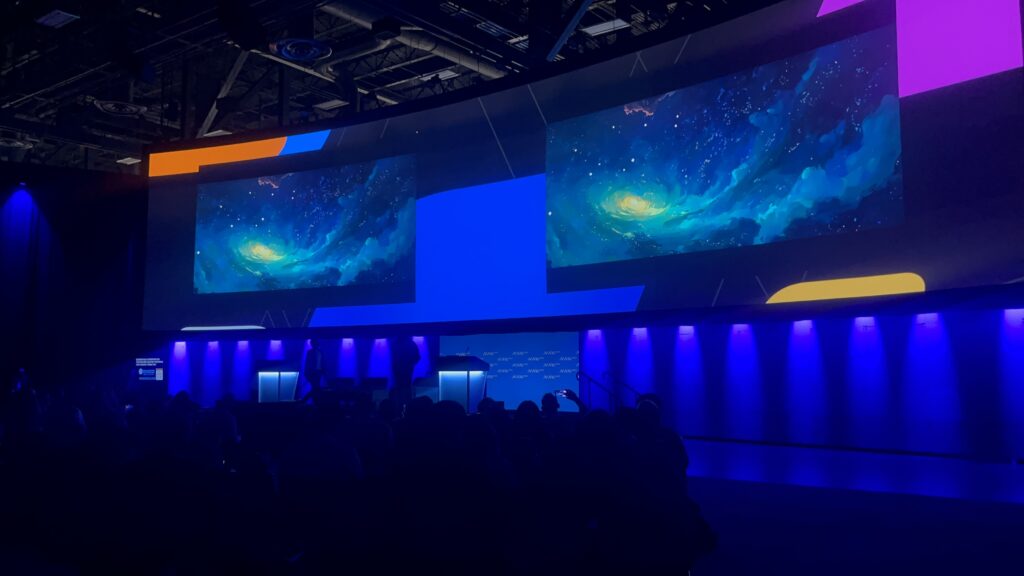
The film’s teaser, along with the underlying technology, was prominently featured during Microsoft’s keynote presentation at NAB, titled “Powering Intelligent Media; From AI Experimentation to Real-World Impact.” Collective Artists Network was highlighted as a frontier organisation, demonstrating how AI has moved beyond experimental use into full-scale production deployment within the media and entertainment industry. The technology is also being showcased at Microsoft’s exhibition booth, offering industry professionals a closer look at the systems driving this transformation.
Despite its technological foundation, Krishna is not conceived as a spectacle-driven experiment. The creators have emphasised that emotional authenticity remains central to the film’s vision. Elements such as stillness, music, and performance are deliberately foregrounded, ensuring that the narrative resonates on a human level. This balance between innovation and emotion reflects a conscious effort to avoid the pitfalls of technology overshadowing storytelling.
The Galleri5 pipeline is designed to empower filmmakers rather than replace them. Operating within a secure, enterprise-grade cloud environment, it enables creators to harness AI in ways that align with their artistic intentions. By streamlining complex production processes and reducing costs, the platform opens new possibilities for large-format theatrical content rooted in Indian history and culture, while also making advanced tools more accessible to a broader range of storytellers.
For Jio Studios, the project aligns closely with its broader vision of taking Indian narratives to a global audience. Jyoti Deshpande, President of Jio Studios’ Media and Content Business, described Krishna as both a technological and cultural milestone. She noted that the studio’s ambition extends beyond adopting cutting-edge tools; it aims to democratise them, making high-quality filmmaking more intuitive and cost-effective. This approach, she suggested, will empower diverse creative voices and enable storytellers to realise their visions without traditional constraints.
The emphasis on global reach is equally central to Collective Artists Network’s perspective. Founder and Group CEO Vijay Subramaniam framed Krishna as part of a larger mission to reimagine not only how films are made, but where they can travel. By leveraging technology developed in India, the company seeks to present the subcontinent’s cultural and historical narratives to international audiences at a scale previously unattainable. This ambition reflects a growing confidence within India’s creative industries, where local stories are increasingly positioned as global cultural exports.
Microsoft’s role in this collaboration underscores the broader industry shift towards AI-driven production. Silvia Candiani, Vice President for Telco, Media & Entertainment, and Gaming at Microsoft, described the current moment as an inflection point. In her view, AI has evolved from a domain of experimentation into a driver of tangible impact at production scale. By enabling end-to-end creative workflows on Azure, Microsoft is helping organisations like Collective Artists Network transform both the efficiency and scope of their output, while ensuring that human creativity remains central.
Krishna also forms part of a larger intellectual property initiative known as Historyverse, a slate of mythology- and culture-driven projects developed by Collective Studios. Positioned as one of India’s most ambitious storytelling universes, Historyverse draws inspiration from figures and traditions that have shaped the subcontinent over centuries. Upcoming narratives are expected to explore characters such as Kali, Karna, and Durga, weaving together mythology, history, and contemporary cinematic techniques.
The previously released series Mahabharat: Ek Dharmayudh serves as the foundation for this broader vision, demonstrating how deeply rooted cultural narratives can be adapted for modern audiences. With Krishna, the creators appear to be extending this approach into theatrical territory, combining scale with innovation in ways that could redefine the genre.
Jio Studios’ involvement further amplifies the project’s significance. As the media and content arm of Reliance Industries Limited, the studio has established itself as a dominant force in Indian cinema. Its recent successes, including the Dhurandhar franchise, have set new benchmarks both domestically and internationally, with the duology grossing over $330 million worldwide and ranking among the highest-grossing films globally in 2026. The studio has also produced a string of critically acclaimed and commercially successful titles, building an extensive library of films and series within a relatively short span.
This track record lends weight to Krishna’s ambitions. By combining Jio Studios’ scale and storytelling expertise with Collective Artists Network’s technological innovation, the project represents a convergence of strengths that could influence the direction of the industry as a whole. The “Make in India, Show the World” philosophy that guides Jio Studios is particularly evident here, as the film seeks to bridge local authenticity with global appeal.
The unveiling at NAB Show 2026 thus marks more than the debut of a film teaser; it signals a broader shift in how cinema is conceived, produced, and distributed. As technology continues to reshape creative industries, projects like Krishna offer a glimpse into a future where artificial intelligence and human artistry coexist in increasingly sophisticated ways.
Whether this approach will become the new standard remains to be seen, but its implications are clear. By integrating AI into the core of filmmaking while preserving the emotional essence of storytelling, Krishna positions itself at the forefront of a cinematic evolution—one that could redefine not only Indian cinema, but the global film landscape in the years to come.
Discover more from Creative Brands Mag
Subscribe to get the latest posts sent to your email.
















Leave a comment