


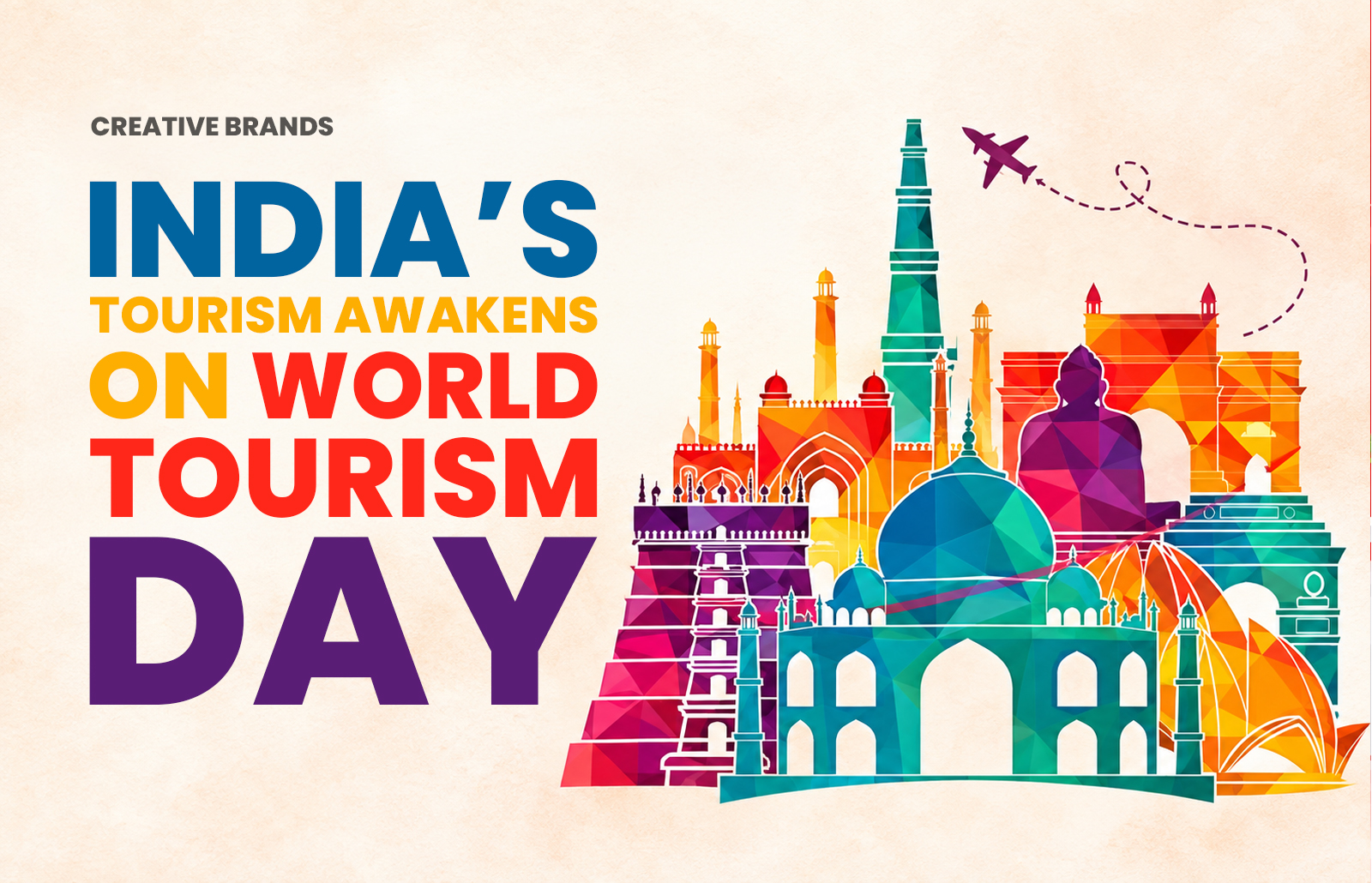
On World Tourism Day 2026, India reflects on its tourism sector contributing 5.22% to GDP, supporting 8.46 crore jobs, and recording 428.55 crore domestic visits. To enhance potential, India must invest in infrastructure, sustainability, digital transformation, skill development, and sharper global branding to secure its place as a premier destination.
India marks World Tourism Day 2026 with renewed urgency to unlock its vast tourism potential. The sector already contributes 5.22% to GDP, supports 8.46 crore jobs, and recorded 428.55 crore domestic visits in 2025, yet challenges in infrastructure, sustainability, and global competitiveness demand sharper strategies.
World Tourism Day, observed globally on 27 September under the theme “Digital Agenda and Artificial Intelligence to Redesign Tourism”, offers India a moment of reflection. Tourism here is more than leisure; it is a driver of livelihoods, cultural diplomacy, and foreign exchange. In 2025, India welcomed 2.53 crore foreign visitors, generating ₹2,76,831 crore in foreign exchange earnings, a sharp rise from ₹63,978 crore in 2021. Domestic tourism surged to 428.55 crore visits, up from 67.7 crore in 2021, underscoring the sector’s resilience and appetite for growth.
Yet, despite this momentum, India’s share of global tourism remains modest compared to its cultural and natural wealth. Globally, travel and tourism contributed US$10.9 trillion (10% of GDP) in 2024, supporting 357 million jobs. India’s 5.22% GDP contribution is significant but leaves room for expansion.
India’s tourism story is one of promise and paradox. The numbers show robust growth, yet the sector’s full potential is constrained by fragmented infrastructure, uneven service quality, and limited global visibility. Harnessing digital transformation, strengthening infrastructure, and embedding sustainability into every initiative will be critical. With rising domestic footfall, ecological stress on fragile destinations like Ladakh, Kerala backwaters, and Himalayan circuits must be addressed through green tourism policies, waste management, and community-led conservation.
Equally vital is skill development. Over 1.68 lakh individuals were trained between FY 2020–21 and FY 2024–25, with 36,000 placed in tourism jobs. Scaling such programmes will ensure service quality matches global standards. Campaigns like Incredible India remain iconic, but India must sharpen global branding—wellness tourism, spiritual retreats, adventure travel, and heritage circuits—to stand out in a crowded global market.
As the Jaipur Declaration under India’s BRICS chairship highlighted, tourism must embrace innovation and inclusivity to thrive in a competitive global landscape. World Tourism Day 2026 is thus not merely a celebration but a call to action. India must move beyond incremental gains to bold, integrated strategies that position it as a premier global destination—where every journey is not just travel, but a story of culture, heritage, and innovation.
Discover more from Creative Brands Mag
Subscribe to get the latest posts sent to your email.














Leave a comment