


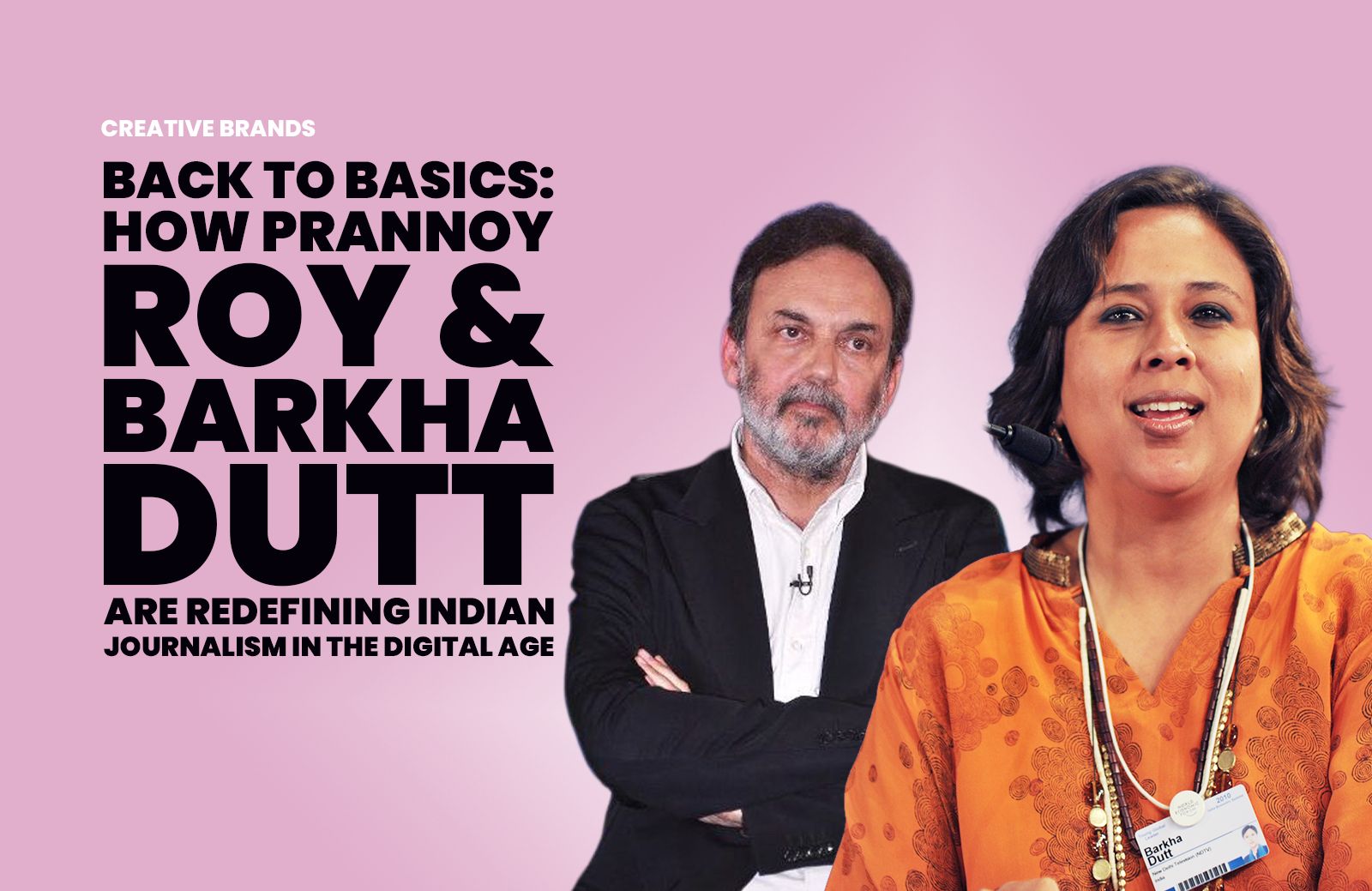
Veteran journalists Prannoy Roy and Barkha Dutt are proving that impactful journalism no longer depends on expensive studios. By embracing mobile reporting and independent platforms, they are reshaping Indian news, prioritising credibility, accessibility, and ground reporting over spectacle in an evolving digital media landscape.
There is something quietly revolutionary unfolding across India’s media landscape, and it is being led not by young disruptors alone but by two of the country’s most seasoned journalists. Prannoy Roy and Barkha Dutt, names once synonymous with the golden era of Indian television news, are demonstrating that the essence of journalism does not lie in gleaming studios or cutting-edge production technology, but in the ability to tell stories with integrity, clarity, and purpose.
For decades, Roy was the face of credible broadcast journalism in India. As co-founder of NDTV, he transformed how millions of Indians consumed news, particularly through his pioneering work in election analysis. Armed with data, calm authority, and intellectual rigour, Roy elevated television news beyond spectacle, offering audiences a deeper understanding of political processes. Today, however, the image of Roy has shifted dramatically. He is no longer confined to a studio desk framed by elaborate graphics and multi-camera setups. Instead, he is seen travelling through the southern states of Kerala and Tamil Nadu, and the eastern state of West Bengal, holding a mobile phone, recording conversations for his digital platform, Dekoder.
The simplicity of this approach is striking. There are no teleprompters, no stylised lighting, no elaborate editing. Yet the content carries weight. Roy’s interviews are marked by the same analytical depth and curiosity that defined his earlier work. The shift suggests not a retreat from journalism, but a return to its core principles—listening, questioning, and documenting reality as it unfolds.
A similar transformation is visible in the journey of Barkha Dutt. Once one of India’s most recognisable television anchors, Dutt built her reputation through frontline reporting, particularly during conflict situations. Her work at NDTV and later at Tiranga TV established her as a fearless journalist unafraid to step into difficult terrains. Today, she operates independently through her digital platform, MoJo Story, where she continues to report extensively from the ground.
What distinguishes Dutt’s current work is its immediacy and authenticity. Often armed with minimal equipment, she reports directly from locations that mainstream television channels may overlook or reach with delay. Whether covering public health crises, social issues, or political developments, her reporting style reflects a commitment to being present where the story is, rather than waiting for it to arrive in a newsroom.
The journeys of Roy and Dutt raise an important question for contemporary journalism: do reporters truly need sophisticated infrastructure to produce meaningful work? For much of the past three decades, the answer appeared to be yes. The rise of 24-hour news channels led to an arms race in technology and presentation. Studios became more elaborate, graphics more complex, and production values more polished. While these advancements enhanced visual appeal, they also contributed to a shift in priorities, where presentation sometimes overshadowed substance.
The digital revolution has disrupted this model. With the proliferation of smartphones, high-speed internet, and social media platforms, the barriers to entry in journalism have dramatically lowered. A single individual can now report, record, edit, and publish a story without the backing of a large organisation. Roy’s work with Dekoder exemplifies this shift. By relying on a mobile phone, he strips journalism down to its essentials, focusing on content rather than production.
This approach also resonates with changing audience preferences. In an era marked by information overload and declining trust in traditional media, audiences increasingly seek authenticity. The raw, unfiltered nature of mobile journalism can create a sense of intimacy and credibility that highly produced broadcasts sometimes lack. When viewers see a journalist on the ground, speaking directly into a phone camera, it can feel more immediate and less mediated.
Dutt’s MoJo Story taps into this sentiment effectively. Her reports often carry the texture of lived experience, capturing voices and perspectives that might otherwise remain unheard. The absence of elaborate production does not diminish the impact of her stories; rather, it enhances their emotional resonance. By prioritising access and authenticity, she demonstrates that journalism’s power lies in its ability to connect audiences with real people and real issues.
However, the move towards minimalist journalism is not without challenges. The lack of institutional backing can limit resources, particularly for investigative reporting, which often requires time, funding, and legal support. Independent journalists must navigate these constraints while maintaining editorial independence and credibility. Both Roy and Dutt bring to their digital ventures the advantage of experience, reputation, and a deep understanding of journalistic ethics, factors that may not be easily replicated by newcomers.
Their work also highlights the evolving relationship between journalists and technology. Rather than viewing technology as an end in itself, they use it as a tool to enhance storytelling. The mobile phone becomes a means of access, enabling them to reach remote locations and capture stories in real time. This contrasts with the earlier model, where technology often dictated the format and style of reporting.
The broader implications of this shift extend beyond individual careers. It signals a redefinition of what constitutes professional journalism in India. As traditional media organisations grapple with financial pressures and changing consumption patterns, independent digital platforms are emerging as viable alternatives. These platforms offer flexibility and creative freedom, allowing journalists to experiment with formats and engage directly with audiences.
At the same time, the rise of independent journalism underscores the importance of credibility. In a digital ecosystem rife with misinformation, the trust built by journalists like Roy and Dutt becomes a crucial asset. Their presence in the digital space lends legitimacy to a medium that is often criticised for its lack of regulation and accountability.
Ultimately, the journeys of Prannoy Roy and Barkha Dutt serve as a reminder that journalism is not defined by the tools it uses, but by the values it upholds. Technology can enhance storytelling, but it cannot replace the fundamental principles of accuracy, fairness, and integrity. By embracing simplicity and focusing on substance, these veteran journalists are not only adapting to a changing media landscape but also shaping its future.
In a country as diverse and complex as India, the need for credible, ground-level reporting remains as urgent as ever. Roy and Dutt, in their own ways, are answering this need, proving that impactful journalism can thrive even in the absence of traditional infrastructure. Their work challenges the notion that quality journalism requires high budgets and sophisticated studios, offering instead a vision rooted in accessibility, authenticity, and a relentless commitment to truth.
As the lines between traditional and digital media continue to blur, their example may well inspire a new generation of journalists to rethink what is possible. In doing so, they reaffirm a timeless truth: at its heart, journalism is about telling stories that matter, no matter the medium through which they are told.
Discover more from Creative Brands Mag
Subscribe to get the latest posts sent to your email.















Leave a comment