


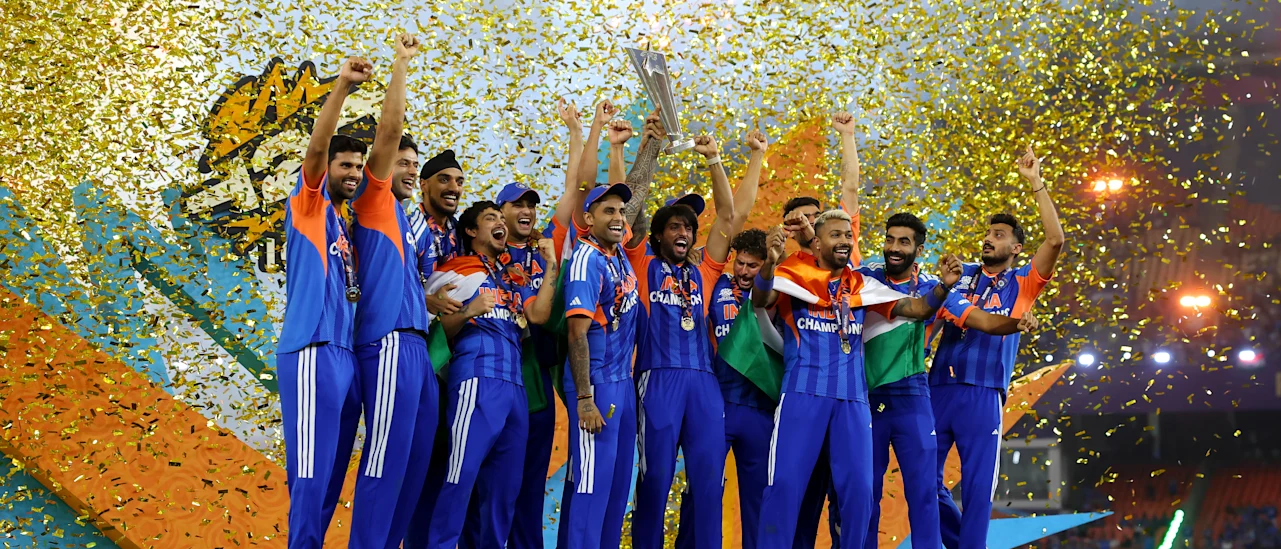
India ended its long wait for another Cricket World Cup title with a commanding victory that confirmed its dominance over the global game. Powered by financial strength, vast talent, and unmatched fan passion, the country finally turned years of expectation and pressure into a defining triumph for modern Indian cricket.
The triumph of the Indian national cricket team at the ICC Cricket World Cup was more than a tournament victory. It was the culmination of years of expectation, investment, and evolution in a sport whose modern centre of gravity now unmistakably sits in India. For a country where cricket borders on civic religion, the win ended a long stretch of frustration and reaffirmed its status as the sport’s dominant force.
For more than a decade, India had been the economic powerhouse of global cricket. The game’s richest broadcasting deals, its most lucrative domestic league, and a vast share of its audience all came from the country. The Board of Control for Cricket in India had transformed cricket’s finances, while the Indian Premier League turned Indian stadiums into the most glamorous stage in the sport. Yet amid all that influence, one thing had been missing: a major global tournament victory that fully matched India’s off-field supremacy.
The wait made the pressure immense. Generations of fans who had grown up watching cricket every evening and debating every selection online expected nothing less than world titles. Each World Cup campaign became a national drama. Teams packed with stars dazzled in bilateral series and league cricket but faltered at crucial moments. The weight of expectation seemed almost as formidable as any opponent.
That changed with a campaign that combined star power with discipline, depth, and clarity of purpose. Led by captain Rohit Sharma and anchored by batting maestro Virat Kohli, the Indian side blended experience with a younger generation raised in the high-pressure ecosystem of franchise cricket. The result was a team that played with both freedom and control.
India’s batting lineup reflected the depth of its domestic structure. Players arrived at the international stage already accustomed to enormous crowds, prime-time television slots, and the scrutiny of millions. Years in the IPL had forced them to develop adaptability, learning to shift tempo and tactics within a single innings. By the time they reached the World Cup, the scale of the moment no longer seemed intimidating.
Equally decisive was the bowling attack, led by the relentless pace of Jasprit Bumrah. Once considered a batting-dominated nation, India has spent the past decade producing world-class fast bowlers capable of dominating on any surface. Bumrah and his fellow pacers brought precision and aggression that repeatedly dismantled opposing lineups, giving India an edge even on pitches that traditionally favored batsmen.
As the tournament unfolded, India’s progress carried an air of inevitability. Victories piled up, often by convincing margins. Crowds in stadiums and millions more watching across television and streaming platforms transformed each match into a national spectacle. The sense grew that India was not merely participating in the World Cup but shaping its narrative.
For fans, the journey revived memories of earlier golden moments. The generation that remembered the triumphs of MS Dhoni and the iconic victories of past eras had waited years to celebrate again. Younger supporters, raised in the era of the IPL and social media highlights, finally experienced the emotional surge that only a global title can deliver.
The final match crystallised everything India had built over the previous decade. The team entered the game not simply as a strong contender but as the symbolic favorite of a cricket economy that increasingly revolved around the subcontinent. Opponents understood that they were facing not just a talented team but the weight of a cricketing superpower.
When the decisive moment arrived—whether through a decisive boundary, a dramatic wicket, or the final run chased down—the eruption of celebration spread instantly across the country. Streets filled with cheering fans, fireworks lit up city skylines, and social media became a rolling wave of national pride. For many supporters, the victory felt like the release of years of pent-up anticipation.
Yet the significance of the triumph extended far beyond the immediate celebration. It confirmed that India’s dominance of cricket was no longer limited to economics and entertainment. The country now stands firmly at the top of the sport competitively as well.
Over the past two decades, India has reshaped how cricket is organised and consumed. Television rights negotiated by the BCCI set new financial benchmarks. The IPL revolutionised player salaries and transformed T20 cricket into a global spectacle. International stars from Australia, England, South Africa, and the Caribbean began structuring their careers around Indian franchise contracts.
Critics sometimes argued that this financial dominance risked overshadowing the sport’s competitive balance. Others feared that international tournaments might lose prestige in comparison with lucrative leagues. India’s World Cup victory, however, demonstrated that the country’s cricketing ecosystem could produce both commercial success and championship-level teams.
Much of that success stems from the scale of India’s talent pipeline. With a population of more than a billion and a cricket infrastructure spanning countless academies, state teams, and youth tournaments, the country can identify and nurture talent at an extraordinary rate. Young players now grow up studying advanced analytics, fitness programs, and tactical strategies once reserved for elite professionals.
The result is a steady flow of cricketers who arrive at the international level ready for the game’s highest pressures. They are accustomed to enormous expectations, relentless competition for places, and the intense scrutiny that comes with representing India. The World Cup triumph reflected the maturity of that system.
For the players themselves, the victory carried deeply personal meaning. Many had spent years chasing the dream of lifting the trophy while enduring criticism whenever results fell short. Winning the World Cup transformed them from celebrated athletes into national icons.
The broader cricket world also took note. Rival teams acknowledged that defeating India had become one of the toughest challenges in the sport. Analysts spoke openly about how the balance of power in cricket had shifted over the last generation—from traditional centres like England and Australia to the booming stadiums and media markets of India.
In that sense, the World Cup win symbolised more than a single tournament result. It illustrated how cricket has evolved in the twenty-first century, with India at its core. The nation that supplies the sport’s biggest audiences, richest league, and most passionate fan base now also holds its most coveted prize again.
For millions of supporters, however, the meaning of the victory was far simpler. It was the thrill of watching their team rise above the pressure, silence doubters, and deliver the triumph they had long imagined. In a country where cricket is woven into everyday life—from neighbourhood streets to packed international arenas—the moment felt like a collective celebration.
India had spent years building the infrastructure, the talent, and the influence to dominate cricket. With the World Cup finally secured again, that dominance now had the one thing it had been missing: the ultimate proof on the field.
Discover more from Creative Brands Mag
Subscribe to get the latest posts sent to your email.














Leave a comment