


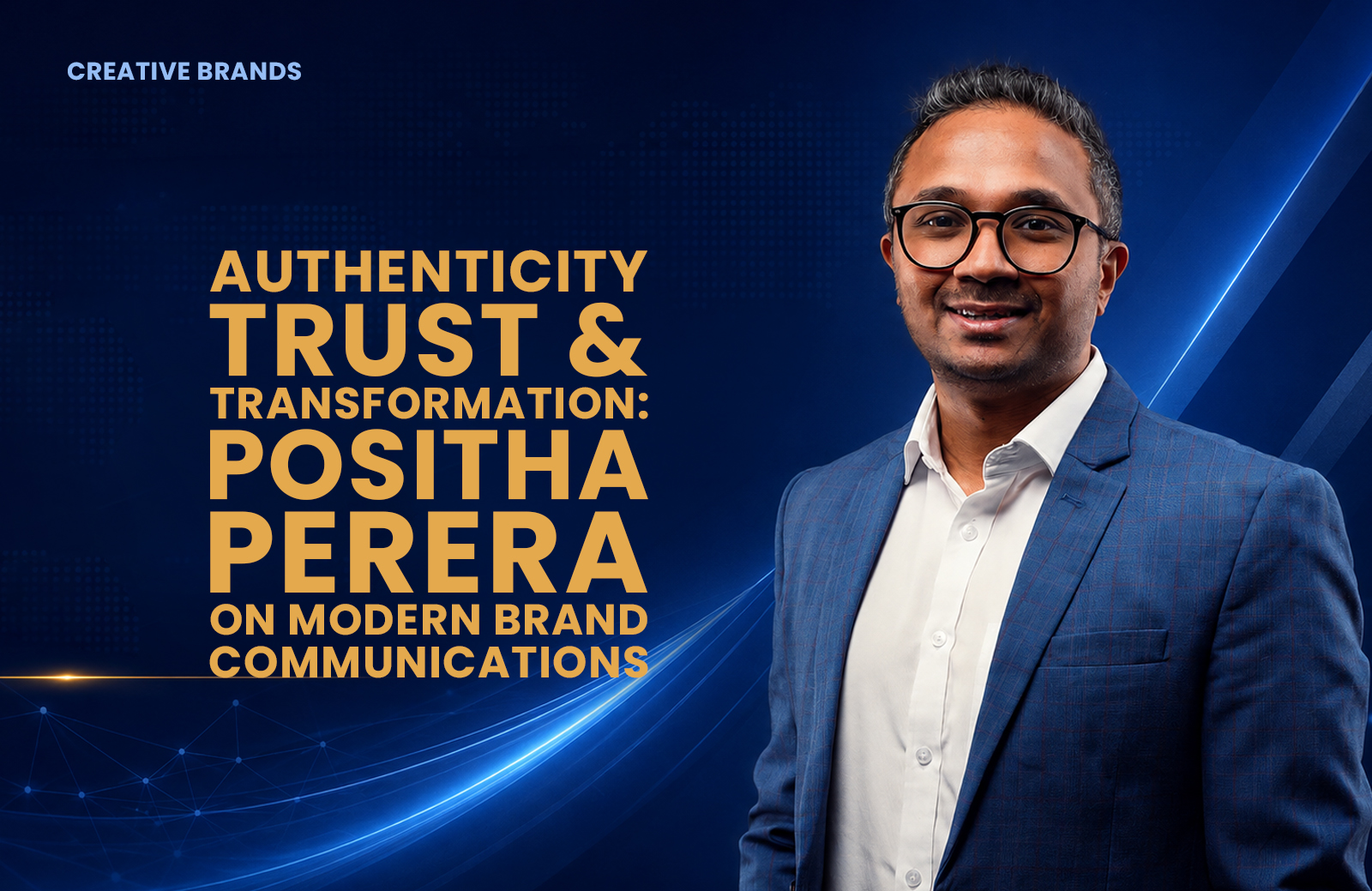
In the dynamic world of corporate communications, where reputation, storytelling and stakeholder trust define brand success, Positha Perera stands out as a seasoned communications leader shaping narratives with clarity and purpose. As the Group Head of Corporate Communications at Maliban Group, he has played a pivotal role in strengthening the organisation’s corporate identity, fostering meaningful engagement and elevating the brand’s presence across diverse markets.
With extensive experience in strategic communications, media relations and brand positioning, Perera brings a nuanced understanding of how modern businesses must communicate in an increasingly connected and reputation-driven environment. His leadership reflects a blend of innovation, authenticity and a deep appreciation for the evolving role of corporate storytelling in building consumer confidence and organisational credibility.
In this exclusive interview with Creative Brands Magazine, Positha Perera shares his insights on the changing communications landscape, the importance of purpose-led branding, and how Maliban Group continues to uphold its legacy while adapting to contemporary market expectations.
1. As the Group Head of Corporate Communications at Maliban Group, how do you balance protecting a legacy brand while keeping it relevant to younger consumers?
Balancing legacy with relevance is probably one of the most important responsibilities we carry at Maliban. When you are entrusted with a brand that has been part of Sri Lankan households for generations, you cannot approach communications purely from a trend-driven perspective. You have to protect the emotional equity that people already associate with the brand while simultaneously ensuring that the next generation sees it as contemporary, relatable, and culturally relevant.
At Maliban, we always start by understanding what should never change. Our core values, trust, quality, consistency, and our deep connection with Sri Lankan families, are non-negotiable. Those are the foundations that built the brand over seven decades. However, how we express those values must evolve with changing consumer behaviour.
Younger consumers today engage with brands very differently. They expect authenticity, speed, cultural awareness, and two-way conversations. This means we cannot communicate in a rigid corporate tone anymore. We need to participate in culture rather than simply advertise to it.
That is why we have consciously worked on modernising the brand’s communication language, digital presence, partnerships, and storytelling approach while still maintaining the trust associated with the Maliban name. Whether it is through youth-focused campaigns, sports partnerships, digital-first activations, or launching brands like Zellers with a much younger tone and identity, the objective is always the same: to evolve without losing who we are.
I believe legacy brands remain relevant when they continue contributing meaningfully to society and culture instead of relying only on nostalgia. Nostalgia can open the door, but relevance is what keeps younger audiences engaged.
2. Maliban is a household name in Sri Lanka. What are the biggest communication challenges that come with managing public perception for such an established brand?
One of the biggest challenges is that when a brand becomes part of everyday life for millions of people, public expectations become extremely high. Consumers do not view Maliban simply as a product brand. They see it as a trusted institution that has grown alongside Sri Lanka itself.
That creates both an advantage and a responsibility.
The advantage is the deep emotional connection people already have with the brand. The challenge is that every communication, every campaign, every business decision, and every public action is heavily scrutinised.
In today’s environment, perception can shift very quickly. Information travels instantly, conversations happen in real time, and consumers expect brands to respond with transparency and accountability. Managing communications today is no longer just about broadcasting messages. It is about continuously listening, engaging, and building trust.
Another challenge for established brands is avoiding complacency. Legacy can sometimes create the illusion that familiarity alone guarantees loyalty. But modern consumers, especially younger audiences, are constantly exposed to new global brands, new digital experiences, and new expectations.
So, one of our key communication priorities is ensuring that Maliban remains culturally connected and emotionally relevant while preserving the trust built over generations.
There is also the challenge of communicating scale. As a diversified group with multiple brands and business interests, we must ensure consistency in messaging while allowing each brand to maintain its own unique identity and audience connection.
Ultimately, reputation management for a brand like Maliban is not a campaign-based exercise. It is a daily commitment to consistency, authenticity, and credibility.
3. How has digital transformation changed corporate communications in the FMCG sector over the past few years?
Digital transformation has fundamentally reshaped how FMCG brands communicate, respond, and build relationships with consumers.
A few years ago, communication was largely linear. Brands created campaigns, distributed messages through traditional media, and measured reach. Today, communication is dynamic, immediate, and highly interactive.
Consumers are no longer passive audiences. They actively shape brand perception through social media, online communities, reviews, and user-generated content.
For corporate communications professionals, this means the role has evolved from message control to reputation management in real time.
At Maliban, digital transformation has changed the way we think about engagement, storytelling, and responsiveness. Campaigns now need to be platform-specific, culturally aware, and adaptable to rapidly changing audience behaviour.
It has also increased the importance of authenticity. Consumers can immediately identify communication that feels overly corporate or disconnected from reality.
Another major shift is the speed at which crises develop and escalate. Digital platforms have shortened response windows significantly. Organizations must now be proactive rather than reactive.
At the same time, digital transformation has created incredible opportunities. It allows brands to engage niche communities, personalize storytelling, amplify local culture globally, and gather real-time consumer insights.
For Sri Lankan brands, digital has also opened the door for international visibility. Today, a well-executed campaign in Sri Lanka can gain regional or even global recognition almost instantly.
The brands that will succeed moving forward are the ones that combine strong strategic thinking with agility, cultural understanding, and meaningful digital engagement.
4. With your academic background in both business administration and an MBA, how has business strategy influenced your approach to communications leadership?
My academic background has significantly influenced the way I approach communications.
I have always believed that corporate communications should not operate in isolation from business strategy. Communications is no longer just a support function. It is a strategic business driver that directly impacts reputation, stakeholder confidence, brand equity, employee culture, and even commercial performance.
Having a foundation in business administration and strategic management allows me to look beyond campaigns and focus on broader organisational objectives.
For example, when we develop communication strategies at Maliban, the conversation is not simply about visibility or awareness. We evaluate how communications can support long-term business growth, strengthen consumer trust, reinforce market positioning, support employer branding, contribute to stakeholder relationships, and create sustainable brand value.
It also helps in decision-making during high-pressure situations. In corporate communications, especially within large organisations, you constantly balance reputational considerations with operational realities and commercial priorities.
A business-oriented mindset helps ensure that communications remain aligned with the overall direction of the company.
Another important aspect is measurement. Modern communications leadership requires demonstrating impact, not just activity. Strategic thinking allows us to move away from vanity metrics and focus more on long-term reputation indicators, stakeholder sentiment, engagement quality, and brand perception.
Ultimately, I believe the future of communications leadership belongs to professionals who understand both storytelling and business strategy equally well.
5. In a crisis, what are the first 3 communication priorities you focus on to protect brand trust?
The first priority is speed with accuracy.
In a crisis, silence often creates speculation, and speculation can damage trust faster than the actual issue itself. However, responding quickly should never mean communicating incomplete or inaccurate information.
So the first objective is establishing verified facts and ensuring there is a clear internal alignment before external communication begins.
The second priority is transparency and accountability.
Consumers today expect honesty. Attempting to hide information, shift blame, or avoid difficult conversations usually damages credibility further.
Even in challenging situations, people respect organisations that communicate openly, take responsibility where necessary, and demonstrate a genuine commitment to resolving the issue.
The third priority is empathy.
In many crises, organisations become overly focused on protecting the brand and forget the human impact of communication.
Stakeholders want to feel heard and understood. Whether it involves consumers, employees, partners, or the wider public, communication must acknowledge concerns respectfully and demonstrate that the organisation genuinely cares about those affected.
Beyond these three priorities, consistency is also critical. Mixed messaging from different departments or spokespeople can create confusion and weaken trust.
Ultimately, crisis communication is not about defending a company’s image. It is about preserving credibility through responsible, transparent, and human communication.
6. How do you measure the success of a corporate communications campaign beyond media coverage and visibility?
Media visibility is important, but it is only one part of the equation. Today, the real measure of communication success is influence and impact. At Maliban, we evaluate campaigns across multiple dimensions depending on the objective.
One of the most important indicators is audience sentiment. We closely observe how people are responding emotionally and behaviourally to the campaign. Are conversations positive? Are consumers engaging meaningfully? Is the campaign creating cultural relevance or brand affinity?
We also look at engagement quality rather than just reach. A campaign with fewer but highly engaged interactions can sometimes create stronger long-term value than a campaign with massive impressions but low emotional connection.
Another key area is reputation impact. We assess whether the campaign strengthened trust, improved stakeholder perception, or reinforced the brand’s positioning.
Internally, we also measure employee alignment and pride. Strong corporate communications should not only influence external audiences but also strengthen internal culture and organisational identity.
From a business perspective, we examine how communications contributes to broader objectives such as brand equity growth, strategic partnerships, market relevance, talent attraction, and long-term consumer loyalty.
In today’s environment, communications should create measurable business value, not just visibility.
7. What role does storytelling play in building emotional connections between consumers and legacy brands like Maliban?
Storytelling is at the heart of emotional brand building. Consumers may remember advertisements, but they connect with stories.
For legacy brands like Maliban, storytelling becomes even more powerful because the brand already exists within the personal memories of multiple generations.
Many Sri Lankans associate Maliban products with childhood, family moments, school memories, celebrations, and everyday life. Those emotional associations are incredibly valuable.
However, effective storytelling is not about romanticising the past. It is about connecting heritage with contemporary relevance.
The most impactful stories are the ones that feel authentic and human.
At Maliban, we focus on stories that reflect Sri Lankan culture, resilience, ambition, family values, youth aspirations, and shared experiences. We want consumers to see themselves within the brand narrative.
Storytelling also helps humanise corporations. In today’s world, consumers want to understand what a company stands for beyond products.
Whether it is through community initiatives, sports development, youth engagement, employee stories, or national contributions, storytelling allows brands to create deeper emotional meaning.
A strong story transforms a product into a relationship. That emotional connection is what allows legacy brands to remain relevant across generations.
8. Internal communications are often overlooked. How important is employee alignment in shaping a company’s external reputation?
Employee alignment is absolutely critical.
In many ways, employees are the most credible ambassadors a company can have.
External reputation is ultimately a reflection of internal culture. If employees genuinely believe in the organisation, understand its vision, and feel connected to its purpose, that authenticity naturally extends outward.
On the other hand, even the strongest external campaigns can fail if there is an internal disconnect.
Today, employees influence public perception more than ever before. Through social media, professional networks, and everyday interactions, employees actively shape how organisations are viewed.
That is why internal communications should never be treated as secondary.
At Maliban, we place significant importance on building alignment across the organisation. Communication internally is not just about sharing information. It is about creating understanding, trust, and shared purpose.
Employees should understand not only what the organisation is doing, but why it matters.
Strong internal communication also becomes especially important during periods of transformation or crisis. When employees feel informed and valued, they become more resilient, engaged, and supportive.
I believe organisations with strong internal cultures build stronger external reputations organically.
People experience brands through people.
9. What advice would you give to young communications professionals in Sri Lanka looking to build careers in corporate affairs and reputation management?
First, develop curiosity beyond communication itself.
The best communications professionals are not just good writers or marketers. They understand business, culture, consumer behaviour, media psychology, geopolitics, technology, and society.
Corporate affairs today sits at the intersection of multiple disciplines.
Second, build strategic thinking.
Anyone can create content. But not everyone can understand stakeholder dynamics, manage reputation risk, influence perception, and align communication with business objectives.
Young professionals should focus on developing analytical thinking alongside creativity.
Third, learn adaptability.
The industry is evolving rapidly. Digital platforms, AI, changing consumer expectations, and new media behaviours are constantly reshaping communications.
Professionals who remain flexible and continuously learn will always remain relevant.
I would also encourage young professionals to value authenticity and integrity.
In reputation management, credibility is everything. Short-term visibility should never come at the expense of trust.
Finally, do not underestimate the importance of people skills.
Communications leadership is fundamentally about relationships with media, stakeholders, employees, consumers, and communities.
Technical knowledge is important, but empathy, emotional intelligence, and the ability to listen are equally valuable.
Sri Lanka has immense creative and strategic talent. I believe the next generation of communications professionals from this region has the potential to compete globally.
10. Looking ahead, what communication trends do you believe will most influence brand building and corporate reputation in South Asia over the next five years?
One of the biggest trends will be the increasing importance of authenticity.
Consumers are becoming more sceptical of overly polished corporate messaging. They want transparency, human communication, and brands that genuinely stand for something.
Purpose-driven communication will continue to grow, but consumers will also become better at identifying performative branding. Organisations will need to demonstrate real action rather than simply communicating intent.
Another major trend will be AI-driven personalisation.
Artificial intelligence will significantly change how brands create content, monitor sentiment, predict behaviour, and engage audiences.
However, while AI will improve efficiency, human creativity and emotional intelligence will become even more valuable differentiators.
Community-driven engagement will also become increasingly important.
Brands will move away from mass communication models and focus more on building smaller but deeply engaged communities around shared interests, culture, lifestyle, and identity.
In South Asia specifically, cultural storytelling will become a major competitive advantage.
Regional audiences increasingly value local identity and authentic cultural representation.
Brands that successfully blend global standards with strong local cultural understanding will create stronger emotional relevance.
I also believe corporate reputation will become more closely tied to societal contribution.
Consumers, especially younger generations, expect companies to contribute positively beyond profits, whether through sustainability, youth development, inclusivity, innovation, or national progress.
Ultimately, the future of communications will belong to organisations that are agile, authentic, culturally intelligent, and genuinely human in the way they engage people.
Discover more from Creative Brands Mag
Subscribe to get the latest posts sent to your email.














Leave a comment