


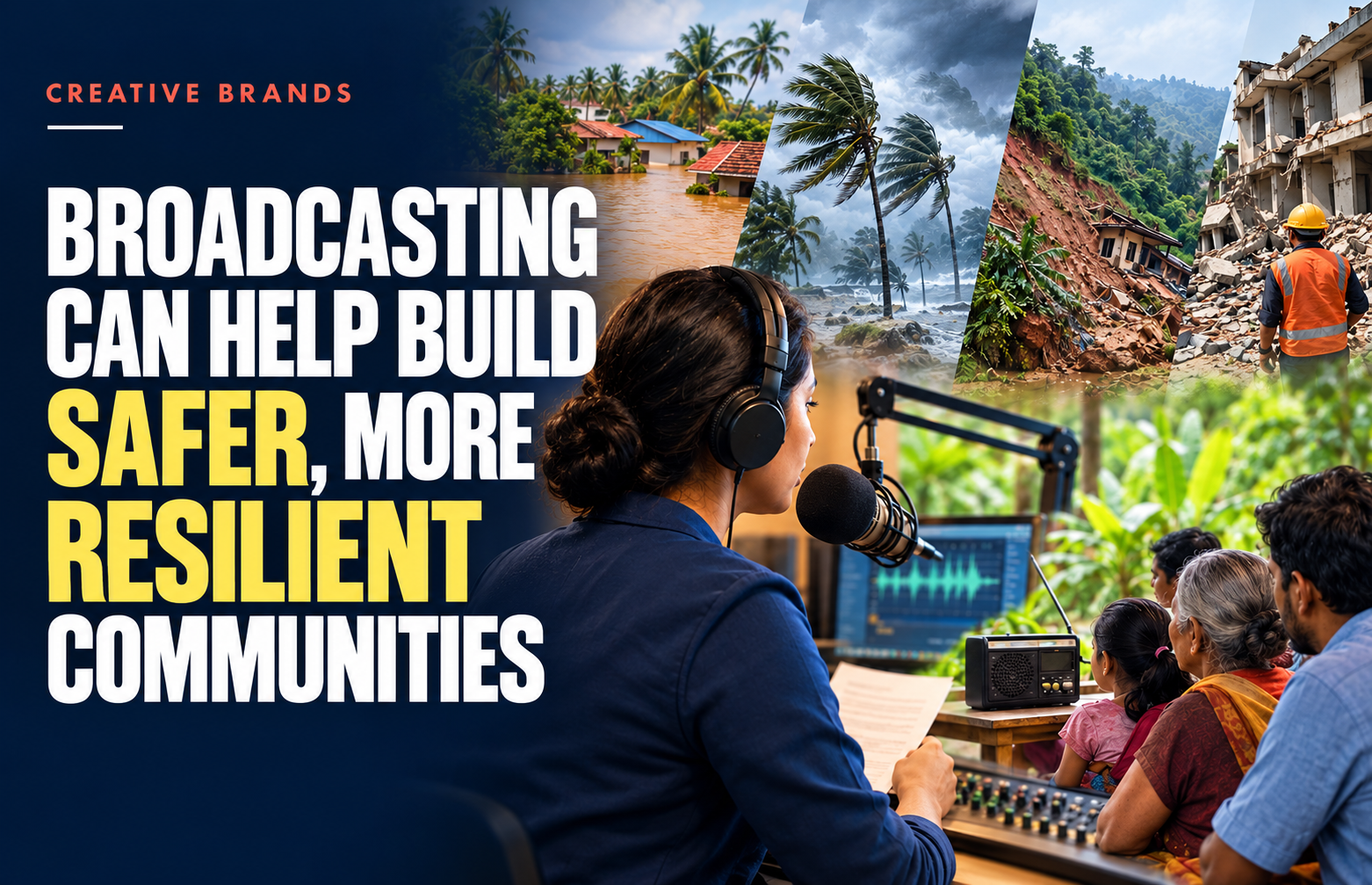
A webinar organised by the Asia-Pacific Institute for Broadcasting Development will examine how broadcasters can support disaster risk reduction through social and behaviour change. The discussion will focus on using media to raise awareness, communicate risks clearly and encourage communities to take informed action before, during and after disasters.
Broadcasting has a critical role to play in helping communities understand, prepare for and respond to disasters, with effective communication often proving as important as emergency response itself. Against this backdrop, the Asia-Pacific Institute for Broadcasting Development (AIBD) is organising a webinar on the role of broadcasters in strengthening social and behavioural change for disaster risk reduction.
Titled “Broadcasting for Resilience: Role of Broadcasters in Social and Behaviour Change for Disaster Risk Reduction”, the online programme will bring together broadcasters and media professionals to explore how the media can contribute to building safer and more resilient communities.
The webinar will examine the ways in which broadcasting can move beyond simply reporting disasters and play a more proactive role in helping people understand risks and respond appropriately. From raising public awareness to communicating practical information, broadcasters can help translate complex disaster risks into messages that communities can understand and act upon.
The discussion comes at a time when communities across the Asia-Pacific region face a range of hazards, including floods, cyclones, landslides, earthquakes and other climate-related emergencies. In such situations, timely and credible information can influence how people perceive risks and whether they take preventive or protective action.
For broadcasters, this places a responsibility not only on newsrooms but also on programme makers, presenters and media organisations to consider how information is framed and communicated. Clear, accessible and locally relevant messaging can help counter confusion and misinformation while encouraging preparedness and responsible behaviour.
The webinar will particularly explore the concept of social and behaviour change communication in the context of disaster risk reduction. Rather than treating audiences merely as recipients of warnings, the approach seeks to encourage greater understanding of risk and motivate people to adopt safer practices.
Broadcast media can also provide a platform for local voices and community experiences, making disaster-related communication more relevant to audiences. Through sustained programming, public service announcements, interviews, documentaries and news coverage, broadcasters can contribute to a culture of preparedness rather than limiting communication to periods immediately before or after a disaster.
The AIBD webinar is scheduled for 13 October 2026 from 2pm to 4pm Malaysian Time (GMT+8) and will be conducted online through Zoom. It is aimed at those interested in broadcasting, media, disaster risk reduction and community resilience.
The programme underlines a broader shift in the understanding of the media’s role during emergencies. Broadcasting is not simply a channel for delivering warnings; it can also become a tool for education, public engagement and long-term behavioural change. By helping people recognise risks and understand what they can do about them, broadcasters can become an important part of building resilient societies.
Discover more from Creative Brands Mag
Subscribe to get the latest posts sent to your email.
















Leave a comment