


From a small village in Kerala’s Thrissur district to a leading fintech office in Bangalore, designer Sanal Gopi is carving a distinctive path in illustration and visual storytelling. Rooted in clarity and craft, his Procreate-driven practice reflects a self-made artist’s commitment to meaningful expression over generative trends.
In an era where design trends shift at the speed of a scroll and generative tools dominate creative conversations, Sanal Gopi has chosen a quieter, more deliberate path. A designer with a strong focus on illustration, visual storytelling and brand communication, Sanal represents a generation of Indian creatives who are as comfortable crafting product visuals and iconography as they are shaping motion graphics for high-growth technology brands.
Hailing from Ammadam in Kerala’s Thrissur district, a region known for its cultural vibrancy and artistic traditions, Sanal’s journey into the design world did not follow a predetermined blueprint. He describes himself as a self-made artist, driven less by formal labels and more by an urge to create expressions that matter. That instinct, nurtured in a small town setting, has now found a professional home in Bangalore, where he works with PhonePe, one of India’s leading fintech platforms, contributing to artworks and motion graphics that reach millions of users.
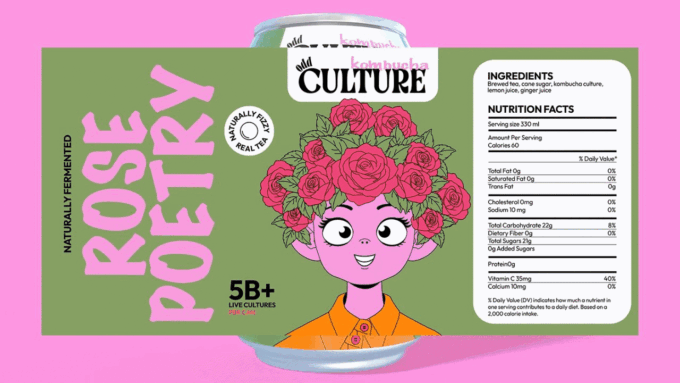
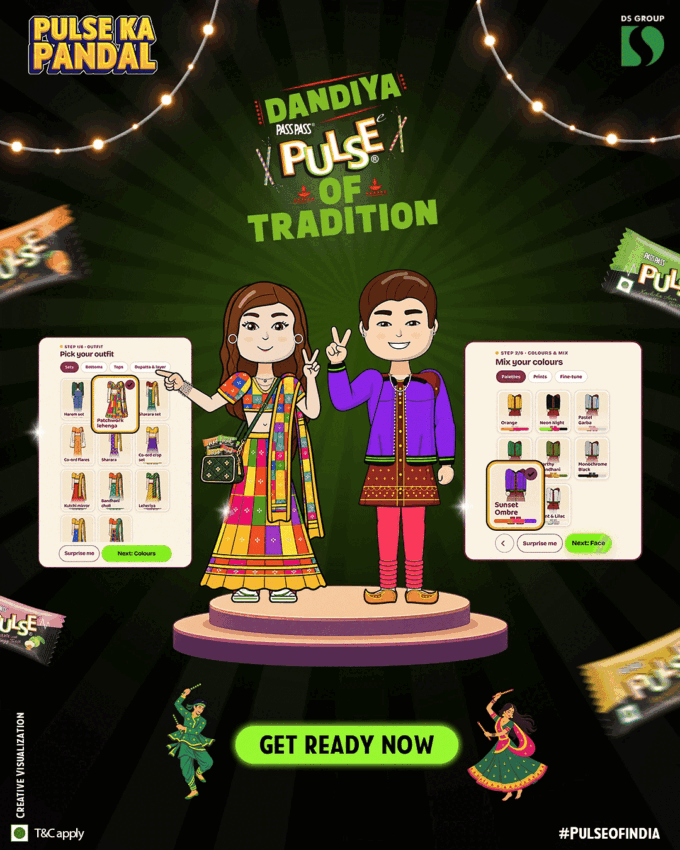
Sanal’s work is anchored in clarity. In brand communication, clarity is currency, and his illustrations aim to distill complex ideas into visuals that are both engaging and accessible. Whether designing product visuals that explain features at a glance or developing iconography that aligns seamlessly with an established design direction, he approaches each assignment as a narrative challenge. What is the story being told? Who is it for? How can a single frame communicate what paragraphs often struggle to express?
Colleagues describe him as collaborative and detail-oriented, someone who works closely with cross-functional teams to ensure that visual elements are not decorative afterthoughts but integral components of user experience. In technology-driven environments like fintech, where design intersects with engineering, marketing and product strategy, this ability to translate ideas across disciplines is invaluable. Sanal’s illustrations and motion pieces are shaped not in isolation but through conversations, feedback loops and iterative refinement.
A significant part of his recent body of work has been created using Procreate, the widely celebrated digital illustration app for iPad. Marketed as “creative tools made for everyone”, Procreate has become a staple among both aspiring artists and seasoned professionals. For Sanal, it is more than a tool; it is an enabler. Its intuitive interface and powerful feature set allow him to move fluidly from rough sketches to polished compositions, experimenting with colour, texture and motion concepts without the friction often associated with heavier software suites.
The affordability of Procreate – a one-time purchase of Rs. 999 – is something he often points out when discussing his process. In a landscape where creative software frequently demands subscription fees that can strain young artists’ budgets, a cost-effective, professional-grade tool can make a tangible difference. For designers emerging from smaller towns or non-traditional backgrounds, access matters. The democratisation of creative tools, in his view, levels the playing field, allowing talent rather than resources to determine outcomes.
Yet, while he embraces digital tools, Sanal is measured in his approach to the current wave of generative AI in art and design. He is not particularly drawn to the generative AI aspect of painting, preferring instead the intentionality of hand-crafted expression. For him, illustration is not merely about output but about process – the hours spent refining a line, adjusting a composition, or experimenting with movement in a frame. The human hand, with its imperfections and intuitions, remains central to his philosophy.
This stance is not rooted in resistance but in preference. He acknowledges the rapid evolution of technology but chooses to focus on expression that feels personal and considered. In a time when AI-generated visuals can be produced in seconds, his commitment to craft underscores a belief that meaning is built layer by layer. The value lies not only in what is seen on screen but in the thought that shapes it.
Growing up in Ammadam, far removed from the bustle of India’s technology corridors, Sanal did not have immediate access to large design studios or advertising networks. What he did have was curiosity and persistence. Like many self-taught creatives, he relied on online tutorials, experimentation and a steady practice routine to hone his skills. Each project, whether personal or professional, became a stepping stone. Over time, a portfolio took shape, reflecting not just technical competence but a distinct sensibility.
His move to Bangalore marked a significant shift. The city, often dubbed India’s Silicon Valley, is home to a thriving ecosystem of start-ups and established technology firms. At PhonePe, Sanal operates at the intersection of finance and design, a space where visual communication can directly influence user trust and engagement. Motion graphics in such contexts are not ornamental; they guide users through transactions, clarify processes and reinforce brand tone.
The discipline required in fintech design has sharpened his approach. Constraints – whether regulatory, technical or brand-driven – demand precision. An icon cannot mislead; an animation cannot distract from critical information. Sanal’s ability to balance creativity with responsibility has become a defining trait of his professional identity. Each frame must serve a purpose.
Beyond client briefs and brand guidelines, he continues to nurture personal projects. These works, often developed in Procreate, allow him to explore themes and styles that may not fit within corporate parameters. They are spaces for experimentation, for bold colour palettes or expressive character studies that speak to his inner narrative. Even here, however, the thread of storytelling remains consistent.
Sanal’s journey reflects a broader shift in India’s creative economy. Talent is no longer confined to metropolitan centres or elite institutions. Digital platforms, affordable tools and remote collaboration have opened doors for artists from towns like Ammadam to contribute to national and global brands. The arc from Thrissur district to Bangalore is not just geographic; it symbolises the expanding horizons of India’s design landscape.
As conversations about automation and AI continue to reshape the creative industry, designers like Sanal remind us of the enduring power of human intent. Tools will evolve, software will update, and trends will come and go. But the core of visual storytelling – empathy, clarity and expression – remains deeply human.
Looking ahead, Sanal is less concerned with chasing hype and more focused on refining his voice. For him, success is not measured solely by titles or trends but by the resonance of his work. Does it communicate clearly? Does it feel authentic? Does it make the viewer pause, even briefly?
From the quiet lanes of Ammadam to the dynamic workspaces of Bangalore, his journey is one of persistence, adaptability and purpose. In every icon crafted, every product visual refined and every motion graphic animated, there is a thread that connects back to a self-made artist determined to create expressions that matter.
Discover more from Creative Brands Mag
Subscribe to get the latest posts sent to your email.













Leave a comment