


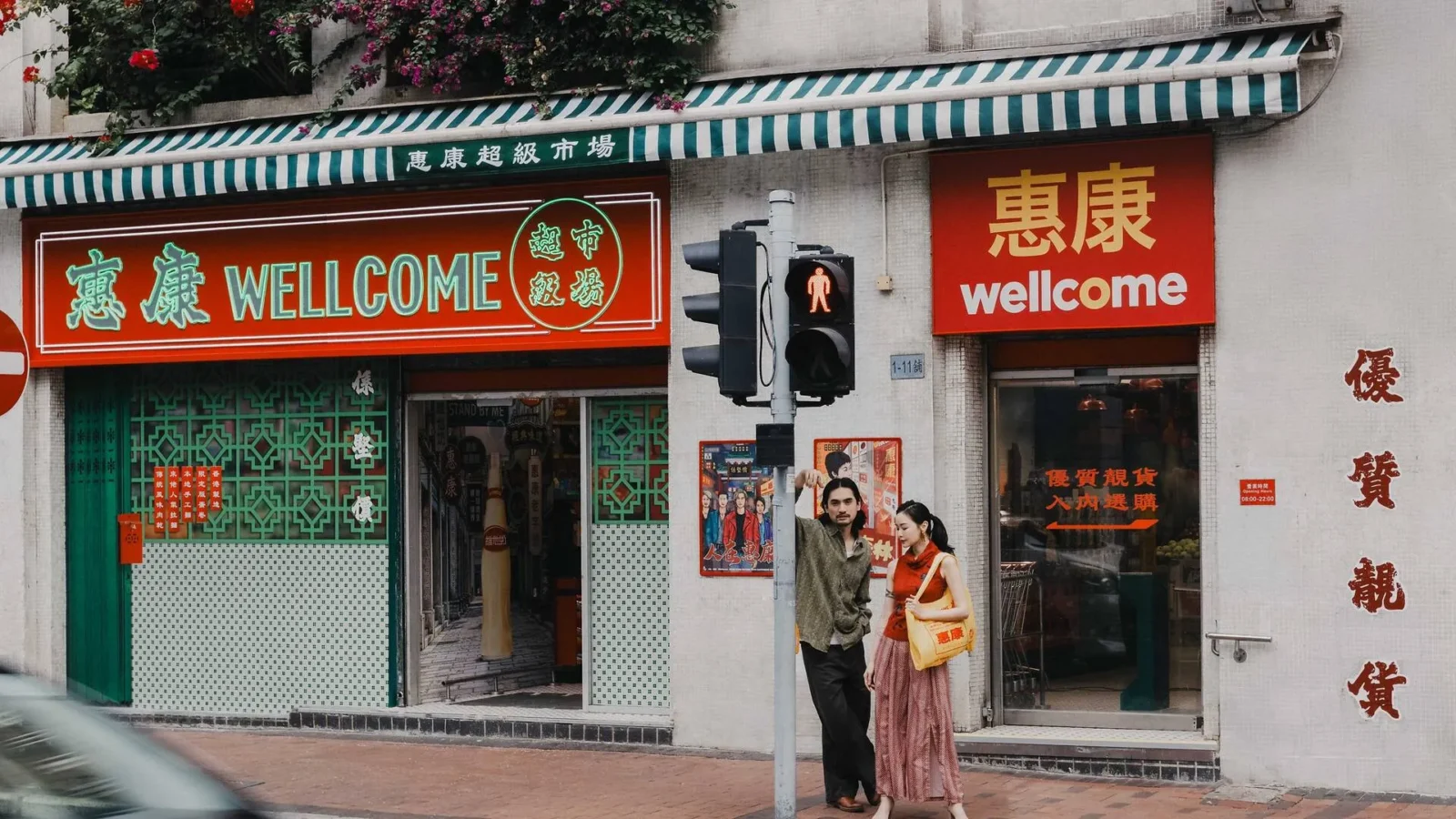
Wellcome’s Prosperous Garden branch has been transformed into a retro concept store celebrating Hong Kong’s cultural memory. With neon-inspired signage, vintage décor and curated local products, the immersive space invites residents and tourists to relive the city’s 1950s–1970s charm while shopping in a uniquely nostalgic environment opposite Old Yau Ma Tei Police Station.
In a city that reinvents itself at dizzying speed, where glass towers replace tenements and LED screens outshine once-familiar neon signs, memory can feel fragile. Yet in the bustling neighbourhood of Yau Ma Tei, Wellcome has created a retail space that gently resists this tide of forgetting. Its Prosperous Garden branch has been transformed into a nostalgic concept store, designed to honour Hong Kong’s cultural heritage and collective memory while offering shoppers an experience that feels more like a journey through time than a routine grocery run.
Set directly opposite the historic Old Yau Ma Tei Police Station, a landmark that itself speaks to the city’s layered past, the location could not be more fitting. The store draws on the visual language and everyday textures of Hong Kong from the 1950s to the 1970s, decades remembered for their distinctive street life, close-knit communities and unmistakable aesthetic. Rather than presenting nostalgia as a museum exhibit, Wellcome has woven it seamlessly into the retail environment, allowing customers to shop, pause, take photographs and reconnect with shared memories in a single visit.
The experience begins even before customers step inside. The façade glows with LED signage inspired by the iconic neon lights that once dominated Hong Kong’s streetscape. These glowing letters and symbols, set against walls clad in nostalgic mirrored tiles, evoke a time when night markets, dai pai dongs and small family-run shops lit up neighbourhoods with vibrant colour and energy. It is a deliberate visual cue, inviting passers-by to slow down and look twice, to recognise something familiar that has largely vanished from modern streets.
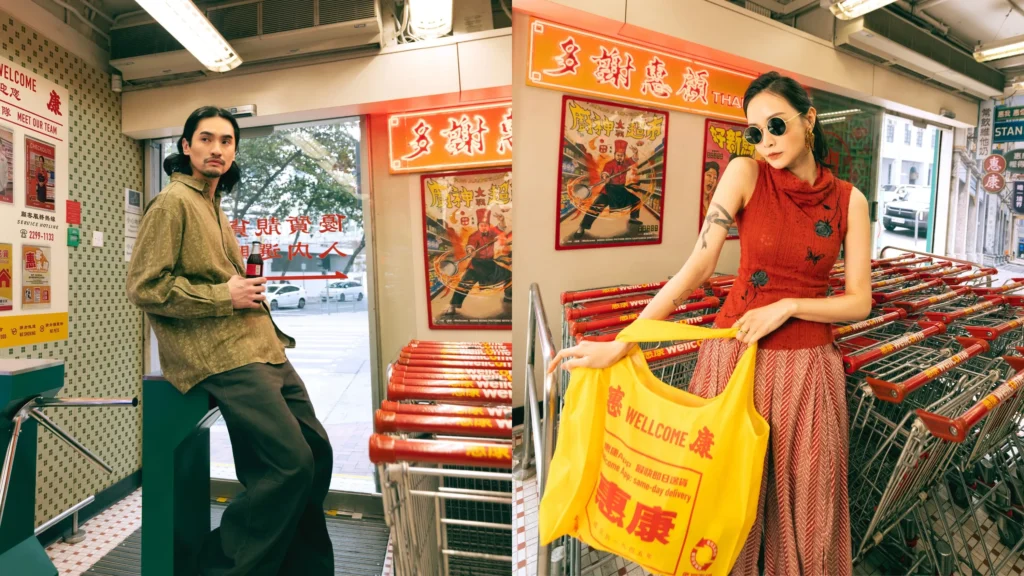
Beyond the entrance, the classic silver-and-green turnstile acts as a symbolic gateway. Crossing it feels like stepping through a portal. Inside, visitors are guided into what the store calls a ‘time tunnel’, a passage rich with carefully curated vintage details. Red plastic lamps hang overhead, casting a warm glow reminiscent of old tea houses and modest living rooms. A retro television installation doubles as a selfie spot, encouraging visitors to frame themselves within the imagery of another era. Nearby, an old-style telephone display recalls a time when rotary dials and coiled cords were fixtures in every household.
The recreated grocery scenes are perhaps the most evocative element. Shelves are arranged to resemble traditional neighbourhood shops, stocked not only with everyday products but also with local items and rare souvenirs that carry a sense of place. Traditional street signs line the walls, echoing the typography and design once seen across Kowloon and Hong Kong Island. These visual fragments, drawn from daily life rather than grand historical events, form the emotional core of the concept. They speak to childhood memories, family routines and the rhythm of ordinary days.
For older residents, the store is likely to stir recognition and nostalgia. For younger generations and visitors, it offers an accessible window into a past they may know only through photographs or films. By embedding this historical sensibility into a functional retail environment, Wellcome ensures that the experience feels alive rather than archival. Customers are not merely observers; they are participants, moving through a space where memory and modern commerce coexist.
The decision to create such a concept store reflects a broader awareness of how deeply Hong Kong’s identity is tied to its streetscapes, signage, sounds and textures. As redevelopment continues to reshape the city, there is growing interest in preserving not just monuments but the everyday details that define cultural memory. Wellcome’s approach demonstrates how commercial spaces can contribute to this preservation in creative, engaging ways.
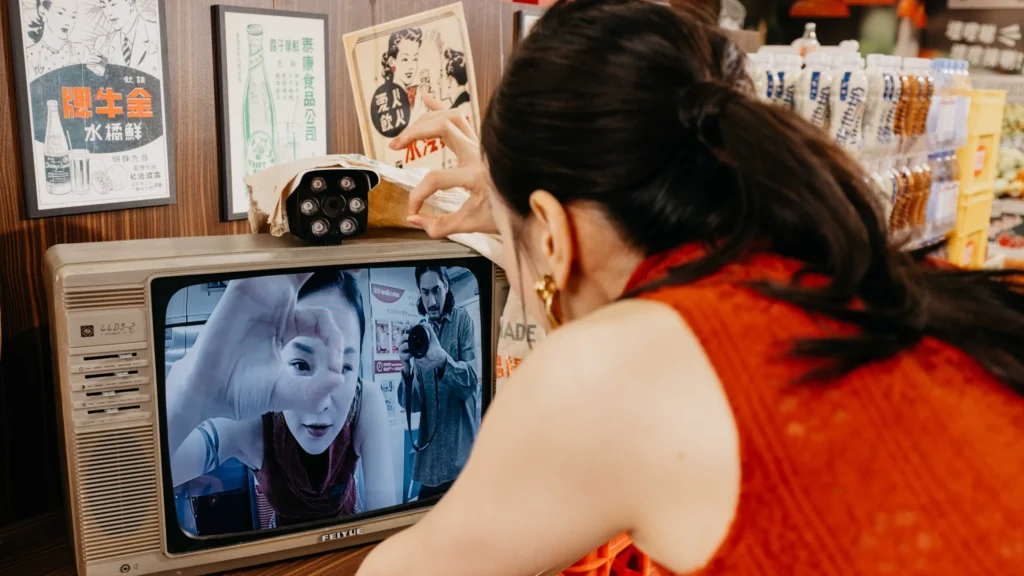
Photo opportunities are thoughtfully integrated throughout the store, acknowledging the contemporary habit of documenting experiences for social media while reinforcing the theme of memory. Visitors pose beside the retro television, in front of mirrored tile walls or under glowing signage that recalls the neon era. These images, shared online, extend the store’s nostalgic narrative beyond its physical walls, creating a digital echo of old Hong Kong.
At the same time, the store remains unmistakably a place to shop. The curated selection of local products and rare souvenirs bridges past and present, offering items that carry cultural significance alongside everyday necessities. This blend ensures that the concept is not superficial decoration but a meaningful integration of heritage into the shopping experience.
The location opposite the Old Yau Ma Tei Police Station adds another layer of resonance. The historic building stands as a reminder of the city’s colonial past and evolving civic life, while the Wellcome store celebrates the lived experiences of ordinary people during transformative decades. Together, they create a streetscape where history is both formal and intimate, institutional and personal.
For tourists, the store offers a convenient and immersive way to encounter Hong Kong’s past without visiting a museum. For residents, it provides a moment of recognition and perhaps a gentle reminder of how much has changed. In both cases, the concept succeeds in turning a routine errand into an experience that prompts reflection.
In transforming its Prosperous Garden branch, Wellcome has demonstrated that retail spaces can be more than transactional environments. They can be places where stories are told, memories are revived and cultural identity is quietly celebrated. In the heart of Yau Ma Tei, shoppers now pass through a silver-and-green turnstile into a living collage of Hong Kong’s mid-century life, emerging not only with groceries and souvenirs but with a renewed sense of connection to the city’s rich and enduring heritage.
Discover more from Creative Brands Mag
Subscribe to get the latest posts sent to your email.













Leave a comment