


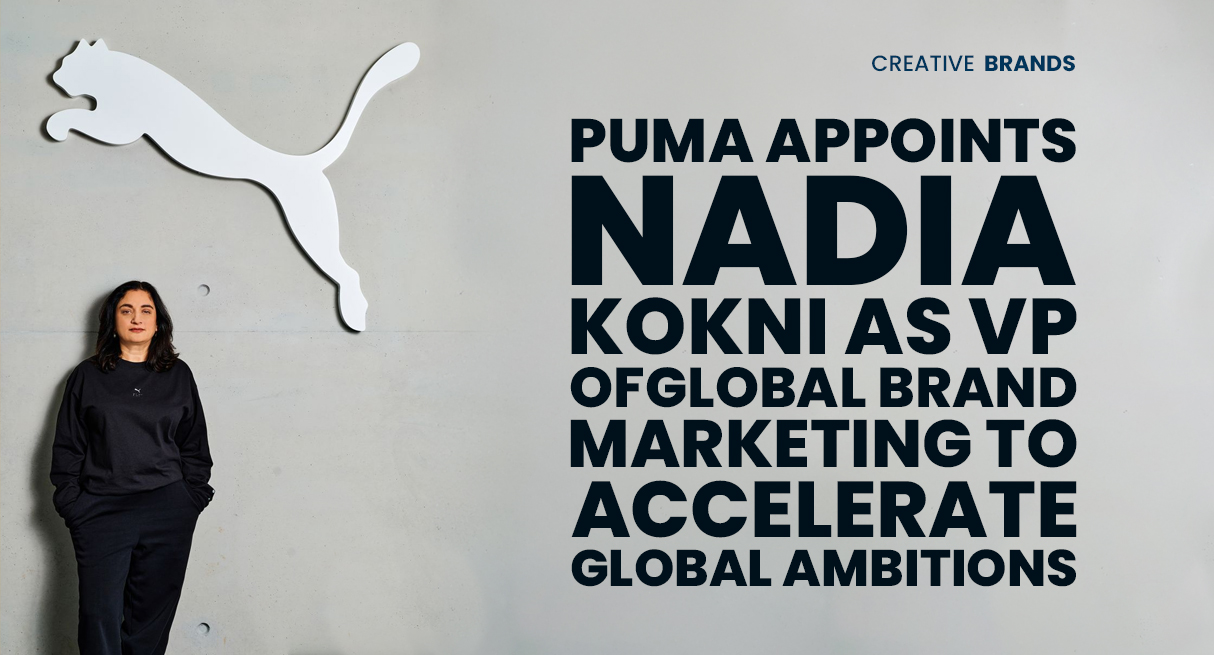
PUMA has appointed Nadia Kokni as Vice President, Global Brand Marketing, entrusting her with brand strategy, creative direction, and global communications. Joining at a pivotal moment, Kokni brings extensive international experience across sport, fashion, and lifestyle as PUMA sharpens storytelling around its product icons and innovation pipeline to advance its global brand ambitions.
PUMA has made a decisive move in its global brand journey, welcoming seasoned marketing leader Nadia Kokni as Vice President, Global Brand Marketing. The appointment, announced with enthusiasm by the company, signals a strategic escalation in how the German sportswear major plans to position itself, communicate its heritage, and sharpen the narrative around both performance innovation and cultural relevance in the years ahead.
Kokni joins PUMA at a moment when the sportswear category is navigating rapid shifts—including heightened consumer expectations, a more competitive innovation landscape, and an increasingly fragmented storytelling environment shaped by digital platforms, creator communities, and global culture. For PUMA, the appointment is widely interpreted as an investment not just in building brand equity, but in accelerating its ability to influence culture, shape lifestyle narratives, and expand mindshare across markets where the brand already performs well and those where it sees long-term headroom.
The company noted that Kokni’s remit will be broad and influential: she will oversee brand marketing strategy, creative direction, integrated marketing, and communications globally. This sweeping scope reflects the growing reality that brand leadership in sport now requires orchestration across multiple arenas—athlete partnerships, product innovation launches, category storytelling, digital creative, fashion tie-ins, and the all-important rhythm of collaborations that generate cultural heat. It is a shift from traditional lifecycle advertising toward platforms that live across channels, seasons, and communities.
Her arrival coincides with PUMA’s efforts to “accelerate its global brand ambition” and sharpen the storytelling around its product icons and innovation pipeline—two areas that have long been central to the brand’s market identity. PUMA’s classics, from the Suede to the Clyde to the Future Rider, have played starring roles in sport and culture for decades, while performance-driven products in football, motorsport, running, and basketball have given the brand credibility with elite athletes and everyday consumers alike. The company’s renewed emphasis on narrative suggests that beyond performance metrics or style credentials, it now wants the stories behind these products—and the athletes, creators, and communities who wear them—to be more clearly articulated to the world.
For Kokni, the appointment adds to a career characterised by transformation, global context, and cross-industry versatility. The company highlighted her “deep international experience” shaping leading brands across sport, fashion, and lifestyle—industries that have increasingly overlapped to shape contemporary consumer identities. From the rise of performance fashion, to the cultural crossover of athlete-influencers, to the growing fluidity between the pitch, the street, and the runway, her background positions her at the intersection where modern brand building now happens.
The move is also indicative of how sportswear brands are redefining their internal leadership to match new market realities. In recent years, PUMA has gained brand momentum through a mix of performance credibility and cultural storytelling powered by athletes such as Neymar Jr., Breanna Stewart, and Karsten Warholm; partnerships with motorsport giants like Ferrari; and cultural tie-ins that extend across music, gaming, and fashion. But as competition intensifies—with rivals leaning into innovation cycles, design statements, and collaboration models—PUMA appears poised to further codify its brand voice globally, ensuring that its performance narratives and cultural expressions are not just compelling but consistent and scalable.
Industry watchers note that the global sport category is no longer dominated solely by product technologies or athlete endorsements. It thrives increasingly on the ability to build worlds around products, connect emotionally with communities, and sustain cultural presence through storytelling ecosystems. Brands that manage to link innovation to identity—making product launches feel like cultural events rather than retail moments—tend to be rewarded with longevity and loyalty. The creation of new senior roles that blend strategy, creative, and communication reflects this shift, and Kokni’s appointment sits neatly within it.
There is also an ambition component that speaks to PUMA’s recent trajectory. In the last decade, the brand has experienced a resurgence marked by strong financial performance, expanded category presence, and renewed brand clarity. It has been particularly effective in markets where lifestyle and performance converge, and its initial reentry into basketball—once unthinkable for a brand absent from the category for years—has been seen as a case study in strategic reactivation. The appointment of a global brand marketing leader at this stage suggests that PUMA intends to move from momentum to scale, ensuring that its narrative coherence matches its product and commercial ambitions.
What makes Kokni’s arrival notable is also how it parallels broader industry shifts around leadership diversity and global sensibility. Sportswear and lifestyle brands now operate in a world where cultural influence can originate from Seoul as easily as from London or New York, where creators on social platforms can drive as much product adoption as broadcasters, and where local storytelling often informs global perception. Having a leader with experience across geographies and industries reflects recognition of this complexity—brands today must be global platforms with local relevance, capable of resonating at the level of the individual while shaping narratives at the scale of billions.
PUMA’s statement welcoming Kokni had a noticeably celebratory tone—“Welcome to PUMA, Nadia!”—a signal of both internal enthusiasm and the recognition that marketing leadership is now as strategic as innovation or athlete partnerships. In categories driven by identity, aspiration, and community, the brand narrative is not merely an accessory to the business; it is a core driver of it.
Looking forward, Kokni’s work will likely intersect with key strategic levers within the brand. These include the product icons that anchor PUMA’s heritage; the innovation pipeline that will define its future in high-performance sport; the fusion between sport and fashion that continues to create explosive collaboration opportunities; and the global communication channels that deliver brand meaning to consumers. Her role will involve not only shaping these threads but weaving them into a cohesive tapestry that strengthens PUMA’s position in a marketplace that respects legacy but rewards evolution.
While leadership appointments in the sportswear sector can vary in significance, this one feels structurally important. It reflects a brand that has momentum and wants more. It reflects a category in which culture and sport are no longer separate universes but shared terrain. And it reflects a business environment in which storytelling is not merely support for strategy—it is strategy.
As PUMA sharpens its global brand ambition, Kokni’s appointment serves as both a signal and a catalyst. It signals intent—an acknowledgement that the brand wants to command a larger cultural and commercial footprint worldwide. And it has the potential to become a catalyst for transformation—aligning product innovation, brand voice, and global storytelling into a more unified whole.
In welcoming Kokni to the leadership table, PUMA has made clear that the next chapter in its brand journey will be built not only on performance and design, but on narrative, creativity, and cultural fluency. If the company’s rallying message is to “Forever Faster”, then the work ahead will not merely be about sprinting—it will be about ensuring that speed is matched by meaning, and that the brand’s global story resonates as powerfully as the athletes and communities who bring its products to life.
Discover more from Creative Brands Mag
Subscribe to get the latest posts sent to your email.














Leave a comment