


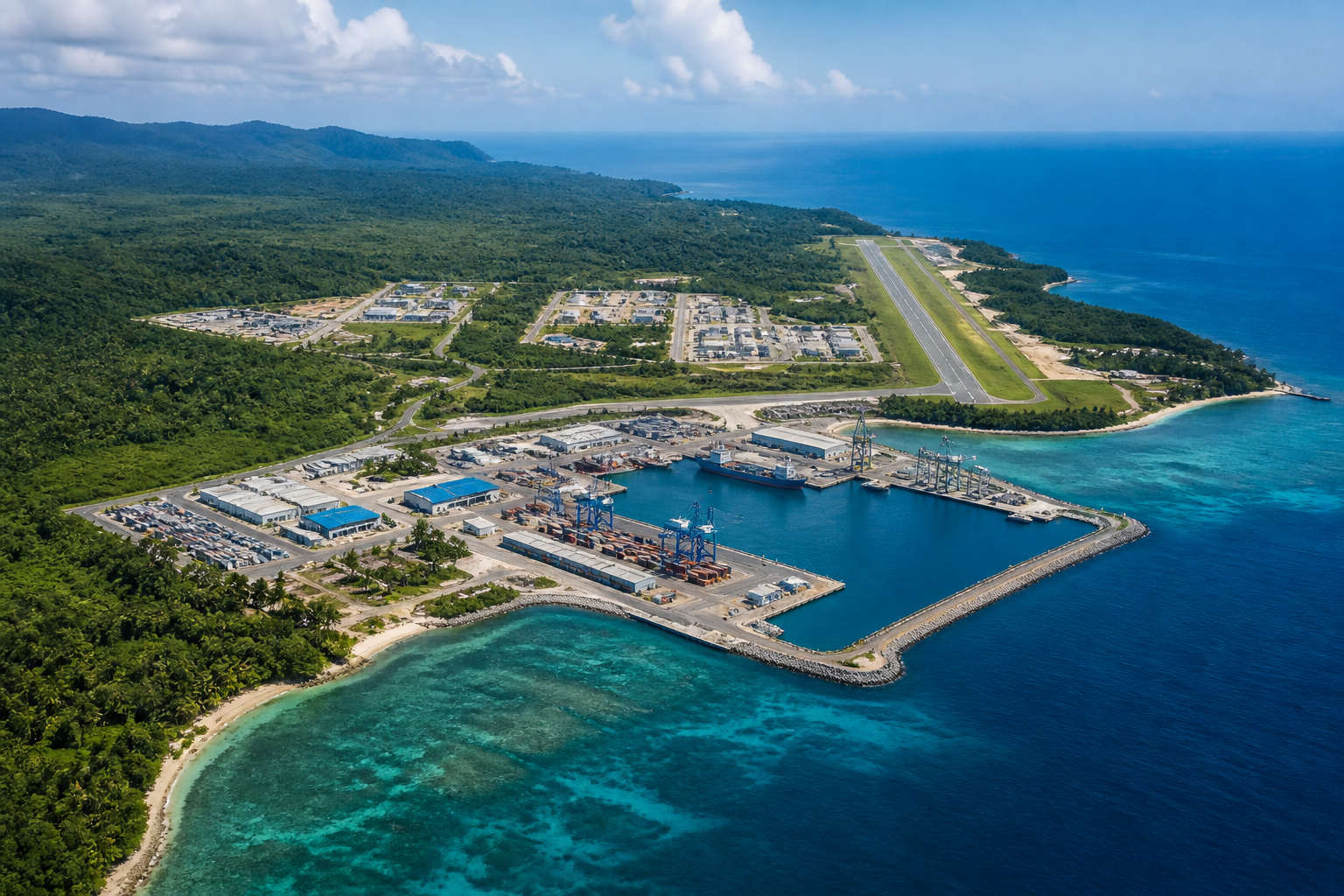
India has advanced plans for the Great Nicobar Project, a major strategic and infrastructure initiative aimed at strengthening its maritime presence in the Andaman Sea. The project combines economic development with national security goals, positioning the island as a key hub for trade, connectivity and regional influence.
India has placed renewed emphasis on its maritime strategy with the advancement of the Great Nicobar Project, a large-scale infrastructure initiative designed to transform the southernmost tip of the Andaman and Nicobar Islands into a strategic and economic hub. According to the Press Information Bureau, the project is intended to bolster the country’s presence in the Andaman Sea while enhancing connectivity with Southeast Asia.
The development is being positioned as a critical element of India’s broader geopolitical and economic outlook, combining infrastructure expansion with national security priorities. Situated close to key international shipping routes, Great Nicobar holds significant strategic value, offering India an opportunity to strengthen surveillance, logistics, and maritime operations in a region increasingly shaped by global competition.
At its core, the project envisions a multi-dimensional transformation of the island, integrating port infrastructure, transport connectivity and urban development. By doing so, it aims to unlock economic potential while simultaneously reinforcing India’s role as a key player in Indo-Pacific trade networks. The initiative aligns with the country’s efforts to expand its blue economy and leverage its geographical advantages for long-term growth.
Beyond its economic ambitions, the project carries strong strategic implications. The Andaman and Nicobar Islands already serve as a crucial outpost for India’s defence and maritime monitoring capabilities. Strengthening infrastructure in Great Nicobar is expected to enhance rapid deployment capabilities and improve coordination across naval and air assets, reinforcing India’s security architecture in the region.
The government has also highlighted the project’s potential to create new opportunities for trade and employment, while improving connectivity between remote island territories and the mainland. However, as with large-scale developments in ecologically sensitive zones, the initiative is likely to attract scrutiny over environmental sustainability and the need to balance development with conservation.
The Great Nicobar Project ultimately reflects India’s evolving strategic calculus, where infrastructure development is increasingly intertwined with geopolitical positioning. By investing in this remote yet pivotal location, New Delhi is signalling its intent to play a more assertive role in shaping the economic and security dynamics of the Indo-Pacific.
Discover more from Creative Brands Mag
Subscribe to get the latest posts sent to your email.
















Leave a comment