


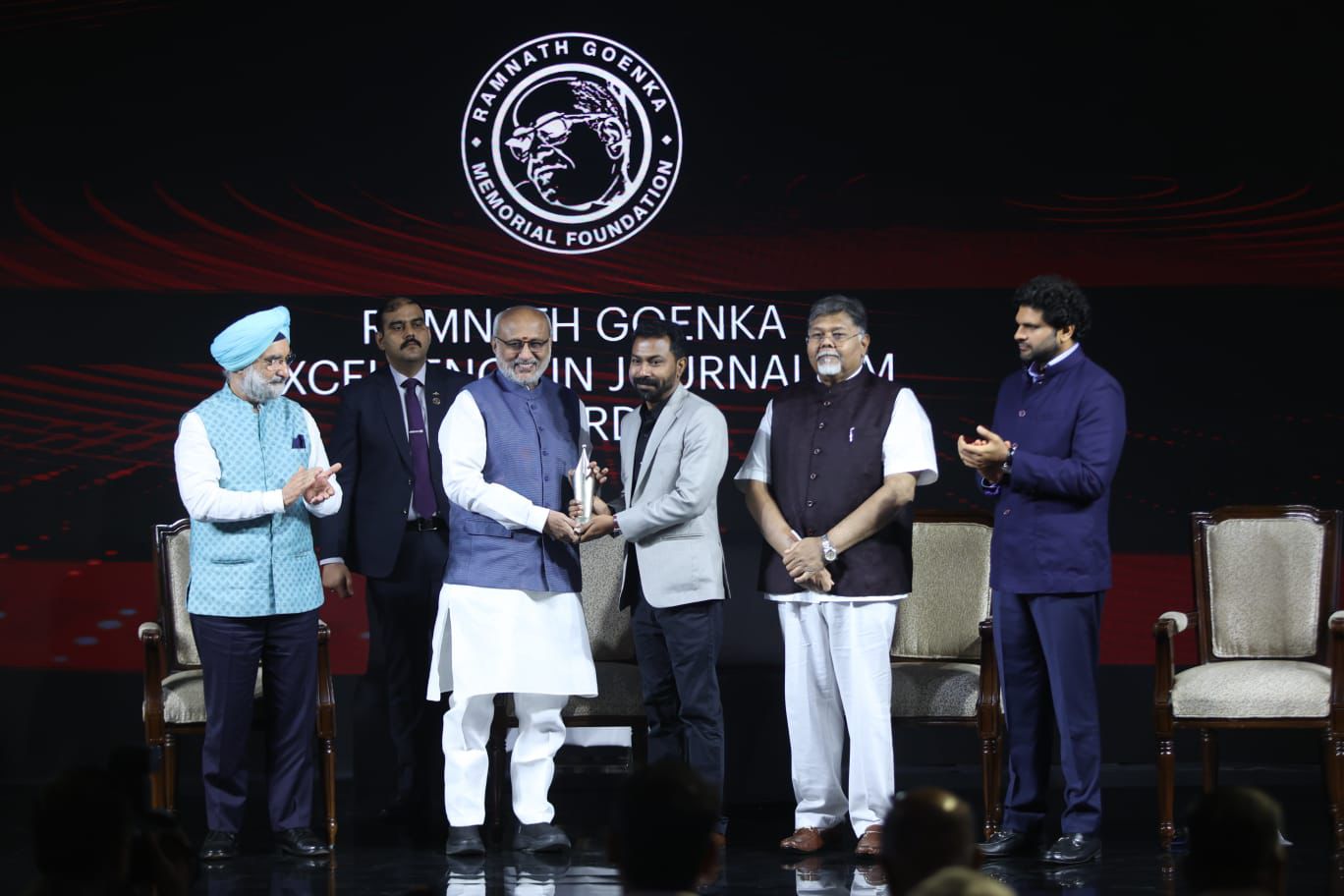
Mathrubhumi journalists Muhammed Sabith UM and Akhil Sivanand have won the 20th Ramnath Goenka Excellence in Journalism Awards for a powerful regional series on landslide-hit Wayanad, underlining the enduring importance of grassroots reporting, public accountability, and people-centred journalism in India’s evolving media landscape.
In a moment of quiet pride for Kerala’s media fraternity, the Mathrubhumi Group has added another chapter to its long-standing legacy of public-interest journalism, as two of its journalists, Muhammed Sabith UM and Akhil Sivanand, were honoured at the 20th Ramnath Goenka Excellence in Journalism Awards, among the most respected recognitions in Indian media.
The winning series, titled “Venam Urulavetta Manessulkulam Thaang,” published on Mathrubhumi’s digital platform, stood out in the regional languages category for print and digital journalism. It moved beyond the immediate spectacle of disaster to examine the invisible scars left on communities in Churalmala and Mundakai, two areas in Wayanad devastated by landslides. Rather than focusing solely on statistics and relief measures, the series asked difficult questions about trauma, resilience, and the long road to rehabilitation that often escapes headlines.
In doing so, the work of Sabith and Sivanand reflected a rare editorial sensitivity, foregrounding voices that are frequently marginalised in disaster reporting. Survivors spoke not just of loss, but of fear that lingered long after the debris was cleared, of disrupted childhoods, and of communities struggling to reclaim a sense of normalcy. The series urged policymakers and society alike to consider mental health support as a critical component of disaster response, rather than an afterthought.
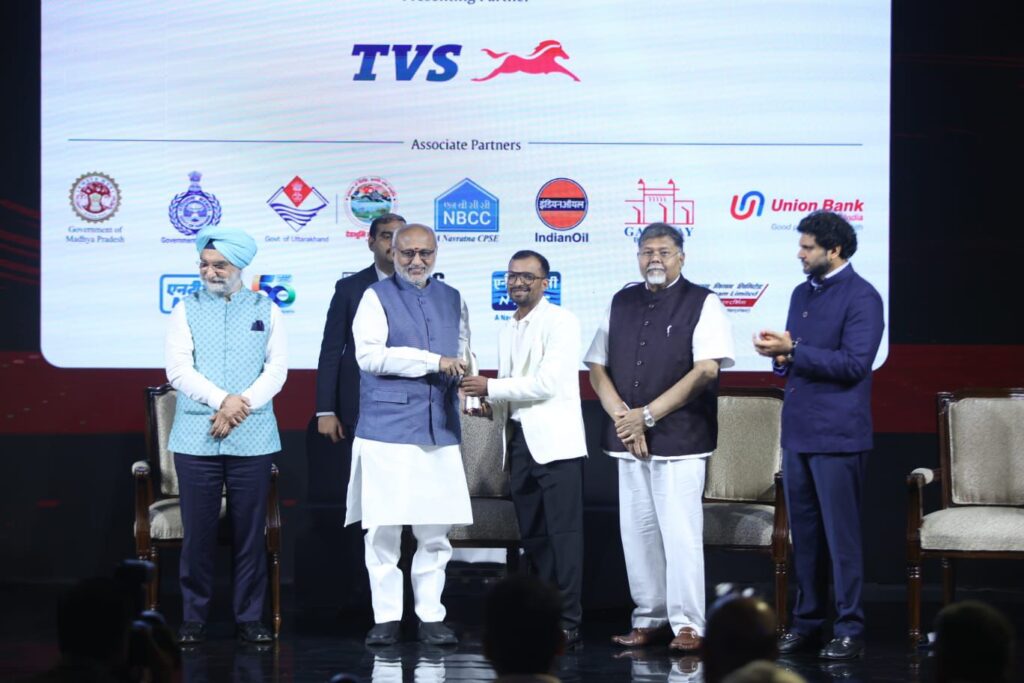
For Muhammed Sabith UM, a native of Magu in Kasaragod, the recognition marks a significant milestone in a career built on regional reporting. Writing for mathrubhumi.com, Sabith has consistently focused on local stories that might otherwise remain invisible in national discourse. His work is characterised by a close engagement with communities and a commitment to reflecting ground realities with clarity and empathy. In an era where breaking news cycles often prioritise speed over depth, his reporting serves as a reminder of journalism’s foundational role in documenting lived experiences.
His colleague, Akhil Sivanand, brings over a decade of experience to the newsroom, including eight years in digital media. Hailing from Kottayam, Sivanand has witnessed and adapted to the rapid transformation of journalism in the online age. As a senior content writer, he has navigated the challenges of digital storytelling, balancing immediacy with nuance. The award-winning series is a testament to this balance, demonstrating how digital platforms can host rigorous, impactful journalism that resonates beyond regional boundaries.
The recognition has also been a moment of institutional pride for the Mathrubhumi Group, one of Kerala’s most influential media organisations. M. V. Shreyams Kumar, Managing Director of the group, described the award as an affirmation of the organisation’s commitment to credible journalism. He noted that such honours are not merely accolades but reminders of the responsibility that comes with public trust. In a media landscape often criticised for sensationalism, he emphasised the importance of maintaining truth and integrity as guiding principles.
Echoing this sentiment, Editor Manoj K. Das highlighted the broader trajectory of the organisation’s journalistic achievements. Over the past five years, six journalists from Mathrubhumi have received the Ramnath Goenka Awards, including names such as Shabitha M.K., Sreelakshmi Menon, and Rose Maria Vincent. The consecutive recognitions, he pointed out, reflect a sustained commitment to what he described as “pro-people journalism” — a form of reporting that prioritises public interest over commercial considerations.
The Ramnath Goenka Excellence in Journalism Awards, instituted by The Indian Express, have long been regarded as a benchmark for journalistic excellence in India. Covering a wide spectrum of categories, from investigative reporting to environmental journalism, the awards celebrate work that upholds accuracy, courage, and accountability. This year, 24 journalists were recognised across 19 categories, spanning print, digital, and broadcast platforms, reflecting the diversity and dynamism of contemporary Indian media.
Against this national canvas, the recognition of a regional-language series assumes particular significance. It underscores the vital role of regional journalism in capturing the complexities of India’s diverse social fabric. Stories told in local languages often carry nuances that are difficult to translate, rooted as they are in cultural context and community memory. By bringing such narratives to the fore, journalists like Sabith and Sivanand not only inform but also bridge gaps between local realities and national awareness.
The Wayanad landslides, which form the backdrop of the award-winning series, are themselves part of a larger conversation about environmental vulnerability and climate resilience in Kerala. Increasingly frequent extreme weather events have exposed the fragility of ecosystems and the urgent need for sustainable development practices. Yet, as the series poignantly illustrates, the human dimension of these crises extends far beyond immediate physical damage. The psychological toll, often invisible and unquantified, demands equal attention.
In recognising this dimension, the work of the Mathrubhumi journalists aligns with a growing global emphasis on trauma-informed reporting. It challenges conventional narratives of disaster journalism and opens up space for more holistic storytelling. By doing so, it not only informs public discourse but also has the potential to influence policy, encouraging a more comprehensive approach to rehabilitation and recovery.
As the applause fades and the awards ceremony recedes into memory, what remains is the enduring impact of stories that matter. For the journalists of Mathrubhumi, the honour is both a culmination and a beginning — a validation of past efforts and a call to continue pursuing journalism that speaks to the lived realities of people. In the fragile landscapes of Wayanad and beyond, such storytelling becomes not just a profession, but a public service, reminding society of its shared responsibilities and collective resilience.
Discover more from Creative Brands Mag
Subscribe to get the latest posts sent to your email.














Leave a comment