


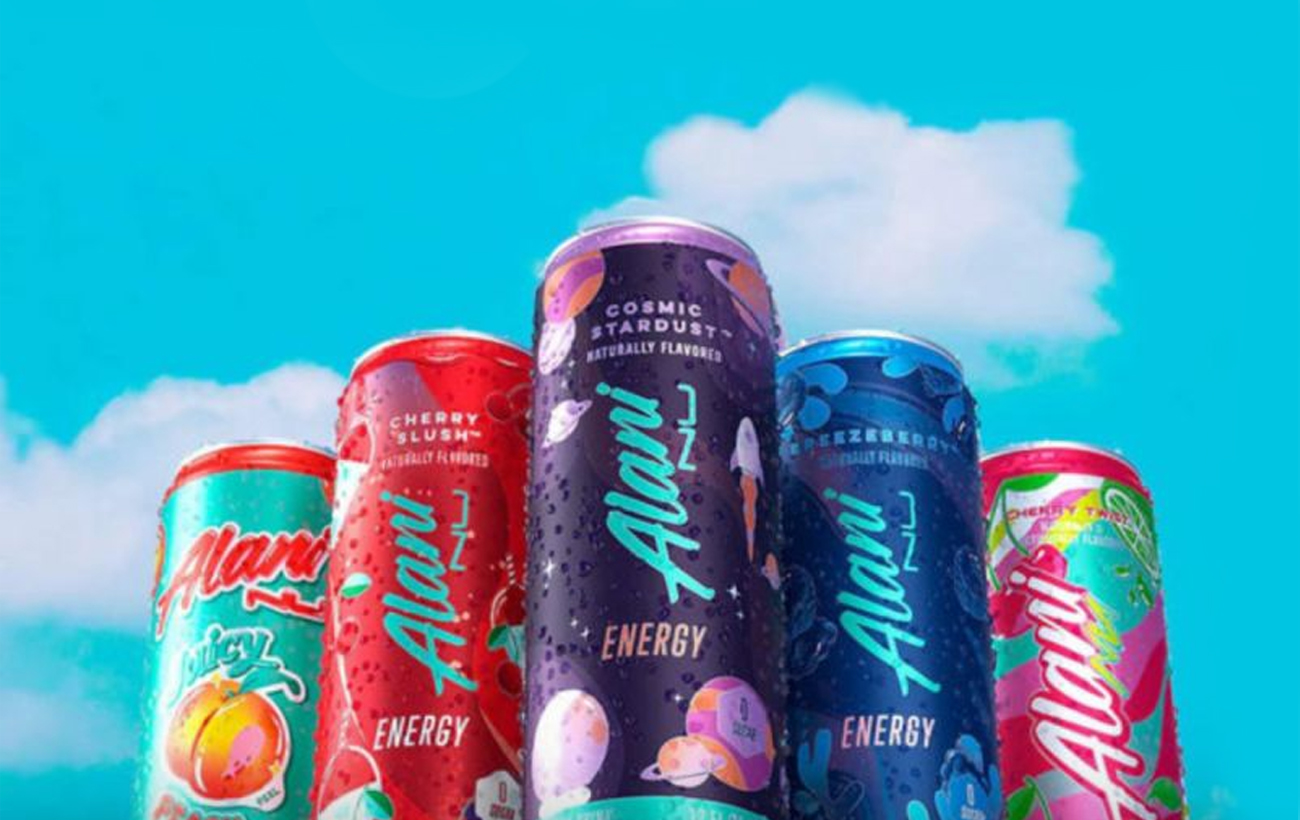
Celsius Holdings has reported a blockbuster first quarter for 2026, with revenue surging 138 per cent to $782 million as its partnership with PepsiCo accelerates growth across the energy drinks market. The company’s expanding portfolio, including Alani Nu and Rockstar, is now emerging as a serious challenger to industry leaders.
Celsius Holdings has entered 2026 with the confidence of a company no longer content with being a disruptive newcomer. Riding on the strength of its expanding partnership with PepsiCo, the fast-growing energy drinks business is now positioning itself as a category leader in the increasingly competitive ready-to-drink energy sector.
The company reported first-quarter revenue of $782 million, marking a remarkable 138 per cent increase year-on-year, while adjusted EBITDA climbed 181 per cent to $195.5 million. The figures underline how aggressively Celsius has scaled since deepening its relationship with PepsiCo, whose extensive distribution network has transformed the brand’s retail reach across the United States.
Executives described Celsius as stepping into an “energy category captain” role, reflecting ambitions that extend beyond simple market share gains. Combined with PepsiCo-backed brands Alani Nu and Rockstar, the portfolio now commands a 20.9 per cent dollar share of the US ready-to-drink energy market, creating a formidable challenger to long-established giants Monster and Red Bull.
Much of the momentum came from Alani Nu, which delivered a record-breaking quarter with revenues doubling to $368 million. The brand’s rapid growth has strengthened PepsiCo and Celsius’s position among younger consumers seeking lifestyle-focused energy beverages with strong branding and functional appeal.
Yet the integration has not been without complications. Rockstar, once viewed as PepsiCo’s primary answer to Monster, continued to decline during the quarter, exposing the uneven performance across the combined portfolio. The contrast between Alani Nu’s explosive ascent and Rockstar’s struggles illustrates the complexity of managing multiple brands in a market where consumer tastes shift rapidly and authenticity increasingly drives purchasing decisions.
The integration has also placed pressure on profitability metrics. Gross margins slipped to 48.3 per cent as Celsius absorbed lower-margin brands into its operations. However, company leadership pointed to approximately $50 million in realised synergies and maintained that operational efficiencies would continue improving as the portfolio matures.
Industry analysts have increasingly viewed the PepsiCo-Celsius alliance as one of the most consequential developments in the global energy drinks business. PepsiCo’s infrastructure has given Celsius a distribution advantage that few independent challengers could replicate, enabling rapid expansion into convenience stores, supermarkets and fitness-oriented retail channels.
The company’s latest results also reflect wider changes in the energy drinks market, where consumers are gravitating towards brands that combine performance, wellness positioning and social-media-driven marketing. Celsius has successfully capitalised on those trends, particularly among younger consumers seeking alternatives to traditional sugary energy beverages.
With growth accelerating and market share rising, Celsius now faces a new challenge: proving it can sustain momentum while integrating an increasingly diverse portfolio. For PepsiCo, the partnership offers a long-awaited foothold in a category historically dominated by rivals. For the broader industry, the latest quarter signals that the balance of power in energy drinks may be shifting faster than expected.
Discover more from Creative Brands Mag
Subscribe to get the latest posts sent to your email.
















Leave a comment